Qualcomm’s AI250 Attacks the AI Inference Memory Bottleneck | Durga Malladi Interview
October 30, 2025
Never Ask This Of ChatGPT
October 31, 2025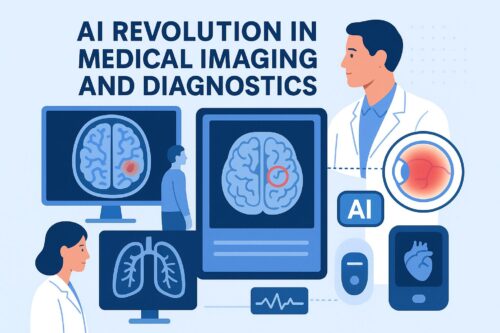
One of the most profound advancements lies in AI’s enhancement of diagnostics and medical imaging, where algorithms now rival or exceed human capabilities in detecting subtle anomalies. For instance, AI models trained on extensive datasets, such as those from the UK Biobank, can predict over 1,000 diseases, including Alzheimer’s and kidney disease, years before clinical symptoms appear, enabling early interventions that may alter disease trajectories. In neuroimaging, AI identifies 64% of epilepsy-related brain lesions overlooked by radiologists, leveraging global MRI repositories to refine interpretations. By mid-2025, approximately 90% of U.S. healthcare systems had incorporated AI into imaging workflows, yielding marked improvements in accuracy for radiologists and pathologists alike.
Tools analyzing brain scans for stroke patients, for example, achieve double the precision of professionals, pinpointing critical treatment windows, such as within 4.5 hours post-onset, and thereby elevating survival rates. Similarly, AI’s detection of bone fractures surpasses the reliability of urgent care physicians, reducing miss rates from around 10% and minimizing unnecessary follow-ups. In specialized applications, autonomous deep learning systems screen for diabetic retinopathy in alignment with clinical guidelines, boosting adherence and accessibility, particularly in resource-limited settings. Portable AI-enabled echocardiography further democratizes cardiac assessments, delivering automated, multitask analyses via mobile devices. Collectively, these innovations expedite diagnoses, reduce procedural redundancies, and fortify patient prognoses.