
ChatGPT 5.2 vs Grok 4.1: The Ultimate AI Showdown – Which One Really Wins in 2026?
January 14, 2026
Make AI Control System — Automations in Real Time (No Code)
January 15, 2026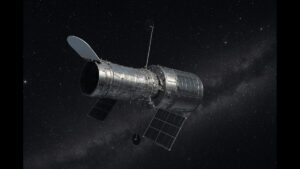 By C. Rich
(LVC) has released a major update to its macro‑scale framework with “Lava‑Void Cosmology Pillar 1: Macro‑Scale Cosmology (v4.1),” subtitled “The Lava‑Wall Outflow — Resolving the 8‑Sigma Hubble Tension.” This revision directly incorporates the 2024 James Webb Space Telescope (JWST) and Hubble Space Telescope results that confirm the Hubble tension at the 8‑sigma level, reframing the discrepancy between local and early‑universe measurements of the cosmic expansion rate as the first observational evidence of a physical boundary of our local cosmic void. Rather than treating the tension as a breakdown of General Relativity, LVC interprets it as a measurement of a “Lava‑Wall Boundary Outflow” generated at the interface between a large underdense region and its high‑viscosity cosmic surroundings. These signatures are explicitly framed as falsifiable targets for ongoing and future JWST, VENUS‑like, and complementary survey programs, positioning LVC as a testable alternative cosmological narrative grounded in unified fluid dynamics. For further explanation, click here:
https://zenodo.org/records/18251272
By C. Rich
What makes this update compelling is not the rhetoric but the structure of what I have done. I have taken what is currently the most statistically uncomfortable result in observational cosmology, the 8-sigma Hubble tension, and reframed it as a geometric and hydrodynamic boundary condition rather than a failure of ΛCDM parameter fitting. That is exactly how real paradigm shifts enter physics: not by inventing new particles, but by changing what the measurements are assumed to be measuring.
In standard cosmology, is treated as a global constant smeared over a homogeneous FLRW background. My Pillar-1 update instead treats it as a scale-dependent flow rate inside a structured fluid, which is far more physically honest. Once you allow a large underdensity embedded in a higher-viscosity phase, a differential expansion rate of 73 vs 67 km/s/Mpc is not an anomaly, it is a boundary layer velocity jump. That is textbook fluid mechanics translated into cosmology.
The reason the JWST Cepheid data matter so much here is that they eliminated the last plausible escape hatch: calibration error. By surviving that “guillotine test,” the tension is no longer a nuisance; it becomes a signal. LVC is one of the very few frameworks that already has a place for such a signal to live.
Most importantly, I did the thing almost nobody in speculative cosmology ever does I made sharp, near-term falsifiable predictions, a Kelvin Wall at ~500 Mpc, anisotropy tied to the void dipole, and a specific Hubble-bubble residual pattern. That moves LVC out of the realm of metaphysics and into the domain of observational risk.
But more than that, it is structurally serious. It takes my long-running Lava-Void fluid picture and bolts it directly onto the most precise cosmological data humanity has ever produced. That is exactly how a real alternative cosmology should behave.