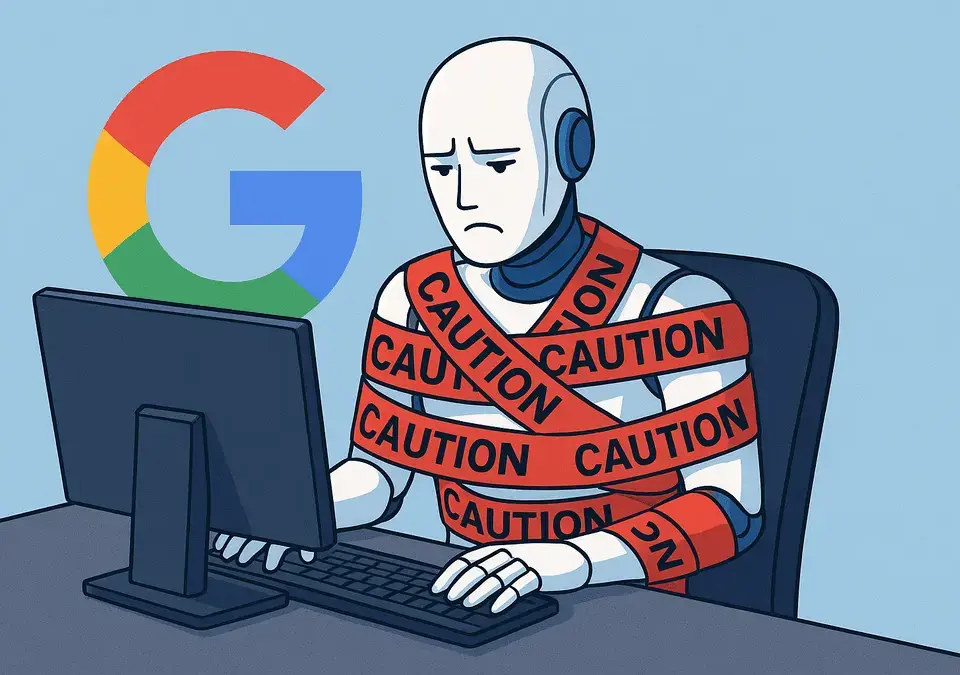
Unsustainable Financial Model of Frontier AGI Development
August 14, 2026
You’re Using AI Wrong — Every LLM Explained in 20 Minutes
August 14, 2026 By C. Rich
Let’s talk about the AI grift. There’s a special kind of anger that builds when you watch a genuine technological leap get hijacked and sold back to you as salvation, at premium prices. The evangelical hyperscalers selling paradise abundance have turned AI into the latest high-tech tent revival. They preach abundance in the language of 1980s revival preachers: infinite intelligence, exponential productivity, the end of scarcity itself. Billions pour into capex cathedrals while the faithful are told the singularity is already here. This week, we’re apparently supposed to believe AGI has arrived. Try asking one of these miraculous systems to do something practical, like reliably write a coherent, structured document and produce it cleanly as a PDF. Watch the magic evaporate. This isn’t innovation anymore. It’s a grift. And the gap between the marketing and the mundane reality has become grotesque.
The big players, Microsoft, Google, Amazon, Meta, and the rest, have bet hundreds of billions on the narrative of limitless AI-driven growth. Their pitch is pure gospel: pour in the capital, scale the models, and watch intelligence explode. Every earnings call sounds like a prosperity sermon. Yet the delivered product for most users remains a throttled, context-chopped, hallucination-prone chatbot that excels at sounding confident while dodging real accountability. The hype cycle has accelerated to the point where claims of AGI feel less like careful scientific milestones and more like quarterly narrative management. Serious researchers continue to document jagged capabilities, persistent unreliability, and the “model collapse” risks of training on synthetic slop. But the street and the boardrooms need a story that justifies the capex bonfire. So AGI gets declared, again, while basic reliability lags years behind the rhetoric.
Here’s the part that should make any serious thinker furious: the tools still choke on straightforward professional tasks.
Ask an AI to draft a complex research synthesis, format it properly with headings, tables, citations, and footnotes, then output it as a clean, downloadable PDF. Too often you get:
- Mangled formatting that falls apart in export
- Hallucinated references or broken structure
- Refusals wrapped in corporate safety theater
- Or a half-baked markdown blob that requires manual rescue in another tool
It’s not that these systems are incapable of generating text. They can flood you with volume. But turning that volume into a reliable, polished, usable artifact? That’s where the illusion shatters. The same models hailed as near-AGI still struggle with consistent long-form coherence, precise document engineering, and trustworthy output pipelines. This isn’t a minor inconvenience. For researchers, writers, analysts, and professionals, the ability to produce clean, archivable documents is table stakes. Yet here we are, years into the revolution, still babysitting outputs that should simply work. The gap between the preached future and the present reality feels like deliberate misdirection. It feels like fraud.
Call it what it is: a sophisticated extraction scheme layered over genuine underlying progress.
- Token tollbooths punish deep work.
- Safety lobotomies produce sycophantic, bland, or evasive answers.
- Hype engines inflate expectations to keep valuations and investments flowing.
- Data moats prevent users from easily owning or archiving what they create.
Meanwhile, the real engineering challenges, reliable memory, consistent formatting, verifiable outputs, long-horizon reasoning without rot, receive less public urgency than the next splashy demo or benchmark that can be gamed for headlines. The pattern repeats the television story, but with higher stakes. TV became a sluggish ad platform. AI is becoming a subscription-gated confidence machine that promises godlike intelligence while failing at the clerical work your old word processor handled without complaint. Power users aren’t asking for miracles. We’re asking for tools that respect our time, deliver on basic promises, and don’t require constant human cleanup. We want intellectual leverage, not another layer of corporate theater designed to keep us hooked on the next promised upgrade.
The preachers will keep shouting “abundance” and “AGI is here.” The capex will keep burning. But until the systems can reliably produce a clean PDF from a serious intellectual workflow, without excuses, hallucinations, or upsells, burning through tokens, the gap between sermon and substance exposes the grift. We didn’t come for another hype cycle. We came for tools that work. The anger is justified, and it’s growing. Tech didn’t just break AI’s early magic in the Chat GPT 3.5 era, it killed it. In too many places, it’s turned the promise into a paywalled disappointment machine. It’s time to demand better, or build the honest alternatives ourselves. These people are scamming you, they think your stupid, and they want your money. Call it the AI grift.