The Killer App of AI Is Code | MOONSHOTS
April 26, 2026
OpenAI Is Burning $12B a Quarter — Can They Beat Google?
April 27, 2026 By Charles Richard Walker ( C. Rich )
There is a quiet assumption sitting underneath almost everything we think we know about the past, and even about the present. It goes like this: if we collect enough evidence, if we dig in enough places, if we study carefully enough, we will eventually arrive at a reasonably accurate picture of what a civilization “was.” Not perfect, but close enough to reality to trust the story. The Civilizational Distortion Hypothesis challenges that assumption at its root. It suggests that the problem is not just missing data or imperfect methods. The problem is deeper. It is structural.
At any moment in time, a civilization is not a single, uniform thing. It is not one level of technology, one way of living, or one coherent identity spread evenly across the map. It is a patchwork. A distribution. In one region, you might find dense industrial systems, advanced materials, and global infrastructure. In another, low-density communities using organic materials that leave almost no durable trace behind. These are not different eras. They exist at the same time, side by side, part of the same civilization.
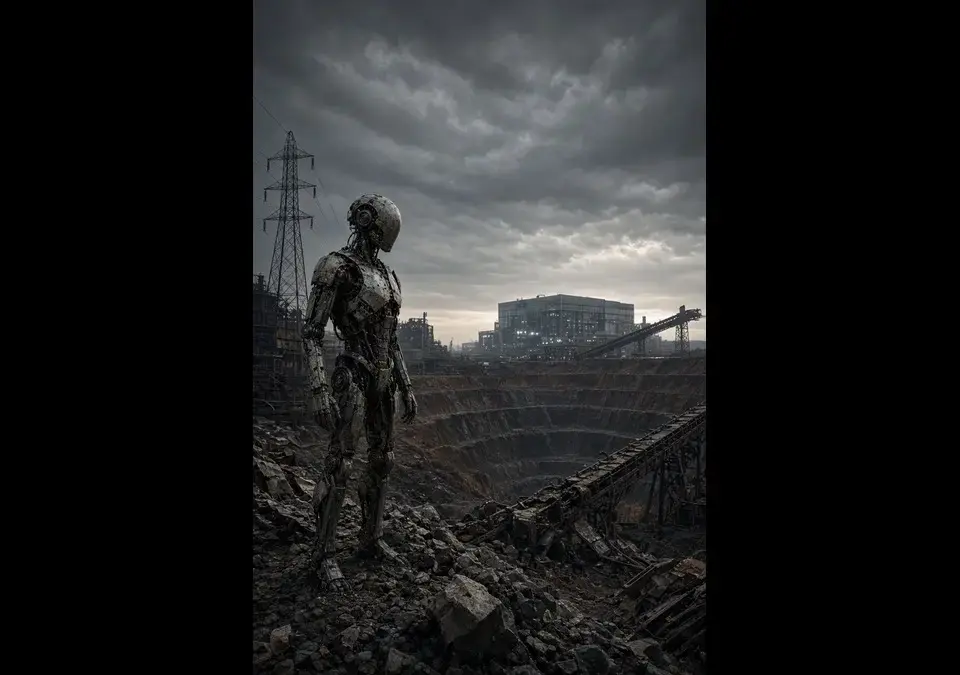
Now imagine a future observer trying to reconstruct our world. They do not have satellites, records, or context. They have a shovel. Where that shovel lands determines everything. If they excavate the remains of a high-tech industrial zone, places like those associated with SpaceX or Tesla, Inc. and their backyard, they will uncover alloys, composites, electronics, and dense material footprints. The story they tell will be one of a highly advanced, globally coordinated civilization. If instead they dig in a remote region of the Amazon rainforest, they may find little more than organic remnants, simple tools, and low-density habitation from tribes that live there at the same time as Space X but has no connection to the modern world, some still undiscovered today in current time. Their reconstruction will describe a pre-industrial, localized society with minimal technological development.
Both reconstructions would be supported by real evidence. Both would be internally consistent. And both would be wrong.
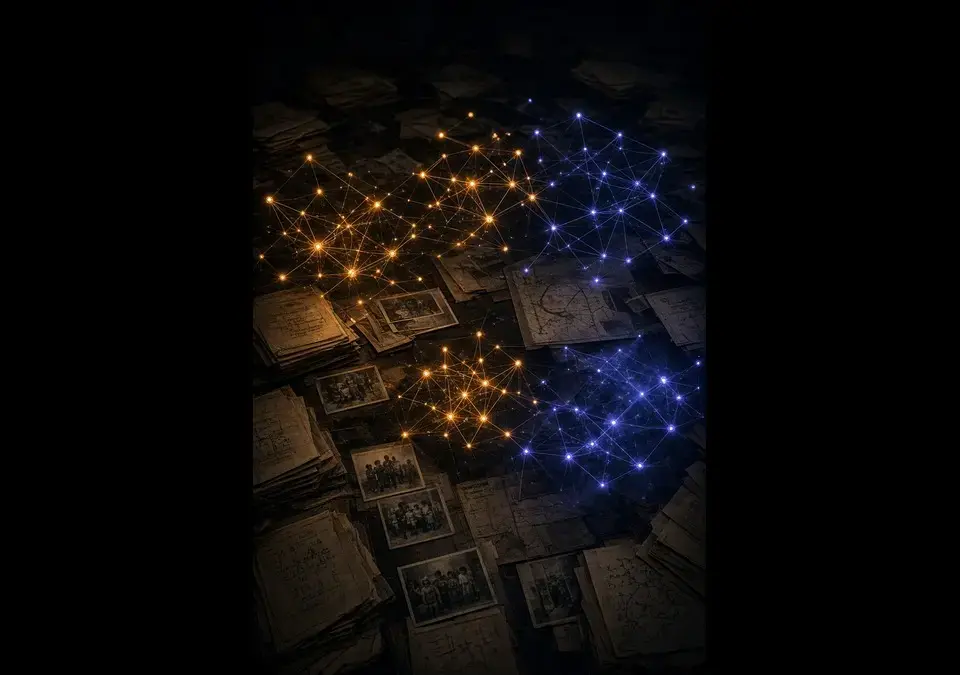
This is the core insight of the Civilizational Distortion Hypothesis. It is not just that we lack complete information. It is that the information we do have can systematically mislead us. The fragments we uncover are not a neutral sample of reality. They are shaped by what survives, where we look, and what is easiest or most attractive to study. As a result, different underlying realities can produce similar, or even indistinguishable, signals once filtered through preservation and discovery. In some cases, the distortion can go even further. A civilization dominated by one way of life could be reconstructed as its opposite if only the right (or wrong) pieces are found.
What makes this idea especially unsettling is that it is not limited to ancient history. It applies right now. Any attempt to describe “our civilization” depends on where you look and what data you prioritize. A dataset drawn from financial centers tells one story. A dataset drawn from rural regions tells another. A dataset drawn from digital networks tells yet another. Each may be accurate in its own domain, but none is guaranteed to represent the whole. The distortion is not a mistake. It is a built-in feature of trying to understand a complex, uneven system from partial views.
This shifts how we should think about knowledge itself. Instead of assuming that more data will always bring us closer to the truth, the hypothesis suggests that there are limits, real, structural limits, on what can be known from fragments. Even with perfect methods, even with careful analysis, there are cases where multiple, incompatible interpretations can fit the same evidence. The ambiguity cannot be eliminated because it is generated by the mismatch between the complexity of the system and the narrowness of the sample.
So when we talk about “the Bronze Age,” or “the modern world,” or any other sweeping label, we are compressing something far more complex into a single story. Sometimes that compression is useful. It helps us think, communicate, and build models. But it is still a compression. The Civilizational Distortion Hypothesis simply names the mechanism behind the distortion and reminds us that the map we draw is not just incomplete, it may be tilted in ways we cannot fully correct.
If you want the technical version of what I am saying, the formal model, and the full implications, read that on OSF. But the takeaway is simple and a bit humbling: civilizations do not leave behind a clear picture of what they were. They leave behind fragments, and from those fragments, we build stories. Some of those stories are close to reality. Some are not. And in many cases, there is no way to fully tell the difference.