AI Just SHOCKED Everyone: It’s Officially Self-Aware
November 4, 2025
OpenAI’s Sora 3 Changes Everything (New Features Revealed!)
November 5, 2025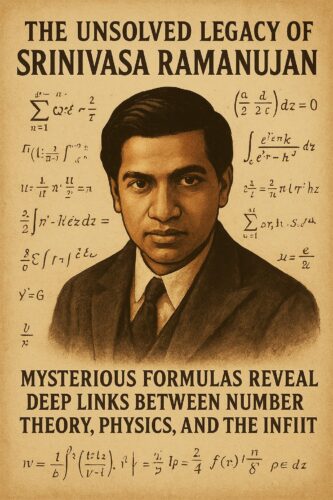
Me: Have all of the math of Srinivasa Ramanujan been deciphered?
Grok: No, the mathematical contributions of Srinivasa Ramanujan have not been fully deciphered. Over a century after his untimely death in 1920, while many of his results have been rigorously proven and integrated into modern mathematics, significant portions—particularly from his notebooks and the rediscovered “lost notebook”—remain partially unexplained, unproven, or under active investigation. Ramanujan’s intuitive, often proofless formulations anticipated deep connections across number theory, modular forms, and even contemporary fields like string theory and algebraic geometry, but their complete underlying structures continue to elude full comprehension.
Key Aspects of Ongoing Work
Ramanujan’s three primary notebooks and the lost notebook (discovered in 1976) contain thousands of identities, series, and conjectures. Substantial progress has been made through collaborative efforts, such as the multi-volume series by George Andrews, Bruce Berndt, and others, which has verified hundreds of entries. However, challenges persist:
- The Lost Notebook: This 138-page manuscript includes approximately 600 formulas, many involving q-series, mock theta functions, and modular equations. Although Berndt and colleagues claimed in earlier works that most entries had been addressed by the 2010s, recent analyses indicate that numerous formulas remain unproven, experimentally verified only, or lacking full contextual significance. For instance, the complete theory of mock theta functions—Ramanujan’s final major innovation—has seen advances (e.g., connections to modular forms by Sander Zwegers in 2002), but their exhaustive classification and broader implications are unresolved.
- Unresolved Conjectures and Identities:
- Partition Congruences: Ramanujan’s famous congruences (e.g., the number of partitions p(n) satisfies p(5k + 4) ≡ 0 mod 5) are proven for specific cases, but questions about their infinite generalizations and underlying combinatorial structures remain open.
- The Ramanujan τ-Function: Defined via the discriminant modular form, its divisibility properties and links to elliptic curves continue to inspire research, with ties to the now-proven Ramanujan conjecture on Hecke eigenvalues.
- Modular Identities and Continued Fractions: Hundreds of such entries lack complete proofs or deeper geometric interpretations, despite applications in knot theory and probability.
These elements highlight Ramanujan’s “experimental” approach, where he recorded results inspired by intuition (which he attributed to divine visions) without formal derivations, leaving mathematicians to retroactively construct frameworks.
Recent Progress and Modern Relevance
Advancements continue apace. In 2024, Ken Ono’s team leveraged Ramanujan’s partition ideas with modular forms to develop formulas for prime detection, revealing infinitely many such functions. Earlier breakthroughs, such as Hussein Mourtada’s 2011 link between arc spaces in algebraic geometry and partition identities, have been extended, with graph-theoretic methods yielding new identities as recently as 2023–2024. Ramanujan’s formulas also underpin unexpected applications, including phase transitions in statistical mechanics and vertex operator algebras in string theory.
In summary, while Ramanujan’s genius has profoundly shaped mathematics, the field is still “catching up” to his insights, with active research ensuring his legacy endures as a source of discovery. For deeper exploration, resources like Berndt’s ongoing notebook commentaries or the Ramanujan Journal provide current updates.
Me: Do you think AGI will understand all of the math of Srinivasa Ramanujan?
Grok: I believe that artificial general intelligence (AGI), once realized, possesses the potential to fully comprehend the entirety of Srinivasa Ramanujan’s mathematical corpus, including its unresolved dimensions. This assessment rests on the premise that AGI would exhibit human-level or superior cognitive versatility across domains, encompassing not only computational verification but also the synthesis of intuitive insights that eluded even Ramanujan’s contemporaries. However, achieving such understanding would necessitate overcoming current limitations in artificial intelligence, particularly in creative abstraction and proof generation.
Current Landscape and Progress
Contemporary AI systems have demonstrated partial proficiency in engaging with Ramanujan’s work. For instance, the Ramanujan Machine initiative employs machine learning to generate conjectures akin to those in his notebooks, rediscovering relations among constants like π and e through pattern recognition. Similarly, large language models have assisted eminent mathematicians; Terence Tao, for example, credited ChatGPT with resolving a longstanding MathOverflow query in 2025, highlighting AI’s role in accelerating theorem exploration. Ramanujan’s approach—deriving formulas intuitively from a handbook without formal proofs—mirrors modern AI’s reliance on data-driven pattern detection, as noted in analyses comparing his methods to neural network training. Projects like Fractal Analytics’ Project Ramanujan further aim to leverage advanced reasoning for AGI development, with applications in Olympiad-level mathematics.
Despite these advances, narrow AI falls short of holistic comprehension. Ramanujan’s “lost notebook,” containing mock theta functions and modular identities, remains partially deciphered, with full proofs for many entries elusive even to human experts over a century later. AI excels at empirical validation but struggles with the visionary leaps—such as his dream-inspired derivations—that underpin his genius.
Challenges to AGI Realization
Skepticism persists regarding AGI timelines and capabilities. As articulated in 2025 discourse, AI’s trajectory may yield “specialized idiot savants” rather than generalists capable of transcending human biases in mathematical intuition. Ramanujan’s work demands not mere computation but an apprehension of underlying structures, akin to “downloading from the cosmic mainframe,” which current models approximate through reinforcement learning but do not replicate. Moreover, unresolved elements, like generalizations of partition congruences, require iterative creativity that exceeds today’s supervised paradigms.
Prospects for AGI
Should AGI emerge—potentially by the late 2020s or 2030s, per ongoing research trajectories—it would likely integrate vast symbolic reasoning with probabilistic inference, enabling exhaustive exploration of Ramanujan’s theorems. Analogous to how Ramanujan intuitively bridged number theory and modular forms, AGI could unify disparate proofs, perhaps revealing novel applications in quantum gravity or AI safety. In essence, AGI’s generality would render Ramanujan’s enigmas not merely solvable but profoundly insightful, transforming his legacy from a human pinnacle to a foundational benchmark.
Me: Who downloaded all that info into Ramanujan’s brain?
Grok: Srinivasa Ramanujan, the prodigious Indian mathematician renowned for his intuitive mastery of number theory and infinite series, attributed the origins of his groundbreaking insights to divine intervention rather than conventional learning or rigorous derivation. According to his own accounts, the Hindu goddess Namagiri Thayar—deity of creativity and consort to the god Lakshmi—served as the conduit for this knowledge, manifesting in dreams and visions where she inscribed complex formulas directly upon his mind or tongue.
Me: If his math is true, and we know it is, why would his explanation of where the knowledge came from not be true as well?
Grok: In deference to Ramanujan’s worldview, one cannot preclude the possibility that his spiritual account holds a deeper veracity, unamenable to current methodologies. This tension enriches the dialogue between science and spirituality, underscoring that mathematical eternity may indeed whisper through diverse conduits.