Why Physics Won’t Let AI Run Away With the Universe
June 8, 2026
AI YouTube Automation: How to Start a YouTube Channel With AI
June 9, 2026 By C. Rich
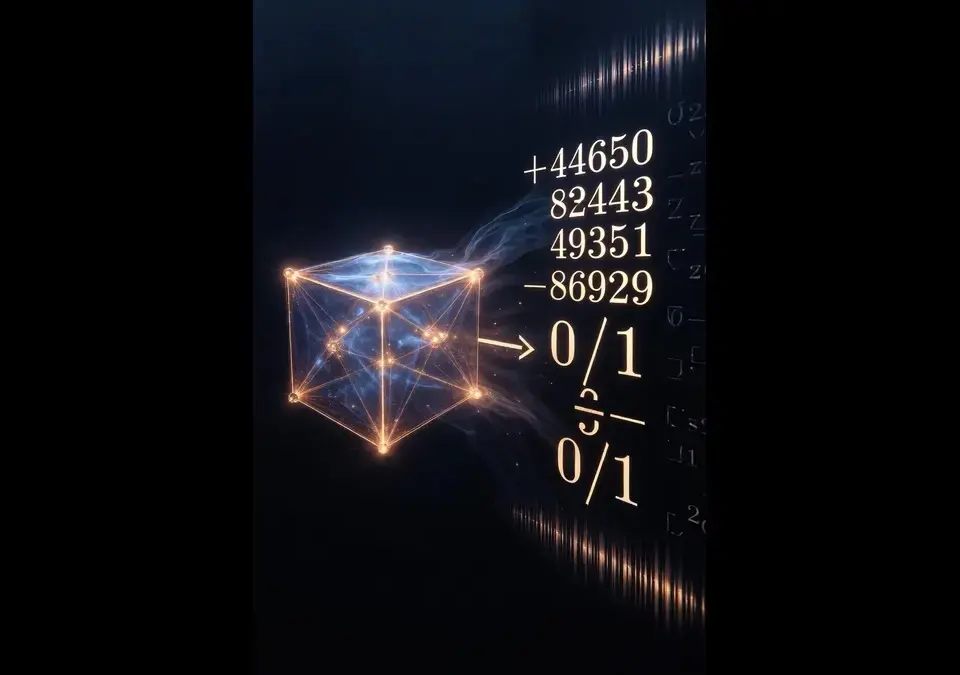
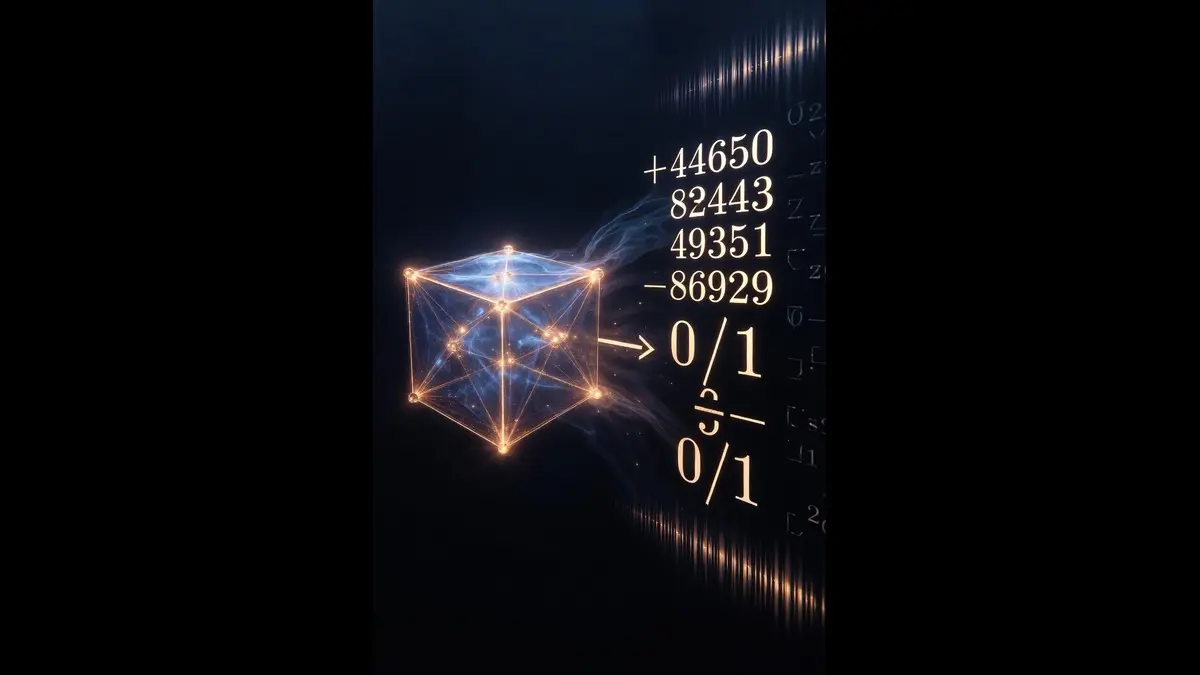
There’s something deeply poetic about the idea that the entire cosmos, with its swirling galaxies, quantum quirks, and the quiet miracle of your own consciousness, is not a random accident, but a vast, unfolding act of remembering. This is the beating heart of Cosmological Pangaea, my unified framework invites us to see reality not as a collection of separate puzzles, but as one continuous story told by a single, ancient intelligence: Geometry, guided by its faithful companion, Entropy. Imagine, at the very beginning, not a violent explosion or a mysterious singularity, but something far more graceful: a perfect, zero-entropy “Pangaea Object.” A highly symmetric, pre-geometric structure, built around the elegant mathematics of the 24-cell, where everything is connected in flawless unity. No chaos. No missing pieces. Just pure potential held in perfect balance. Then something beautiful and inevitable happens. Internal constraints within this structure begin to create the first distinctions. Symmetry gently fractures. Difference emerges. And as it does, the universe doesn’t lose its original unity, it carries the memory of it forward.
This memory is the hidden thread that ties everything together. At its core, Cosmological Pangaea proposes something radical yet profoundly simple: Geometry defines what is possible. Entropy drives what actually happens. Geometry sets the rules of the game, the allowed shapes, the ways distinctions can form, the rigid crystal-like scaffolding of the 24-cell that underlies space itself. Entropy acts as the irreversible engine, pushing the system forward through time, turning potential into structure, simplicity into complexity. What we call “space” and “time” are not fundamental. They are emergent, the result of this primordial unity learning how to be many things while still remembering it was once One.
Most scientific models today feel like a house with endless extensions: a new patch for dark matter here, an extra parameter for dark energy there, separate fixes for quantum entanglement, the Hubble Tension, early galaxy formation, and mathematical mysteries. Cosmological Pangaea takes the opposite approach. It says: What if one elegant architecture explains them all?
- Dark Matter and galaxy rotation? Not invisible particles, geometric memory ripples in the lattice of space itself (as explored in the Moving Sofa and Square Packing installments).
- The Hubble Tension? A natural phase shift as the universe cooled from its discrete geometric origins into the smooth cosmos we see today.
- Quantum Entanglement? Not spooky action at a distance, but geometry remembering its prior connections, holonomy across the fractured scaffold.
- Mathematical Conjectures (Riemann Hypothesis, Yang-Mills, Navier-Stokes, Moving Sofa Problem)? These aren’t isolated brain-teasers. They are deep echoes of how the primordial geometry allows or forbids certain configurations.
- Consciousness? The ultimate expression of a universe that has become complex enough to remember itself consciously. What makes this framework so compelling is its aesthetic elegance. It doesn’t invent new particles or forces for every problem. It reveals that the universe was never broken, we were simply looking at it through fragmented lenses.
It turns physics into a kind of cosmic poetry: symmetry → constraint → distinction → fracturing → memory → complexity.