Your Toaster Is Not Plotting Against You
October 17, 2026Listen to Free Audio Version Here
 My wife got sick recently, and sometimes it takes something that hits close to home to make you appreciate just how profoundly the world is changing. We can read about technological revolutions, marvel at the latest breakthroughs, and speculate endlessly about the future, but when that future suddenly shows up in your own bedroom, you tend to sit up and take notice.
The first thing I did was turn to artificial intelligence. I entered all her symptoms and asked AI what in the world was going on with my old lady. The system evaluated her symptoms, consulted information from the CDC, and identified two different COVID variants circulating in our area. One of them, a strain known as Stratus, appeared to match her symptoms particularly well.
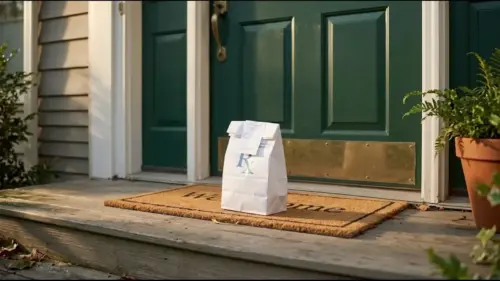
My wife, meanwhile, never had to leave the comfort of her bed. She simply arranged a telemedicine appointment, spoke with a physician, and received confirmation that the AI had apparently identified the culprit correctly. The doctor prescribed her medication, sent the prescription electronically to Walmart Pharmacy, and Walmart delivered it right to our front door. From the initial investigation to the medical consultation to the arrival of her medication, the entire process unfolded while my wife remained comfortably tucked beneath the covers.
I sat back afterward and thought about how different this experience would have been just a few years ago. I remembered all those miserable occasions when someone in the family was sick as a dog, yet somehow had to summon the strength to crawl out of bed, get dressed, climb into a car, and drag their sorry ass to a doctor’s office. There you would sit in a waiting room full of other sick people, sometimes for hours, before finally seeing a physician. Then came the inevitable trip to the pharmacy, where you could easily waste another hour waiting for a prescription while feeling like death warmed over. By the time you finally made it home, the ordeal of getting medical care had practically become another illness in itself.
This time, none of that happened. My wife never had to lift her head from her pillow. Artificial intelligence helped identify the likely illness, a physician evaluated and treated her remotely, and the medication arrived at our doorstep. What once required an exhausting expedition through the healthcare system had become an almost effortless exchange of information, expertise, and services, all coordinated through technologies that barely existed in their present form a generation ago.

What struck me most was that I am hardly a stranger to artificial intelligence. I work with advanced AI systems regularly, exploring their capabilities and contemplating their implications for science, philosophy, and the future of civilization. I spend a considerable amount of my life thinking about where all of this is heading. Yet here I was, sitting in my own home, genuinely astonished by something as ordinary as my wife getting sick and receiving treatment without ever getting out of bed.
There is something remarkable about living through a technological revolution while simultaneously being one of the people studying it. You can understand the machinery, follow the developments, and anticipate the possibilities, yet still find yourself amazed when those possibilities quietly become part of everyday life. We tend to imagine the future arriving with some spectacular announcement, some extraordinary invention that changes civilization overnight. More often, it slips into our lives through the simplest human experiences, transforming familiar inconveniences into things we suddenly realize we no longer have to endure.
My wife got sick, and thankfully, modern technology made getting her medical attention considerably easier. But somewhere between the AI consultation, the doctor’s video call, and the Walmart delivery arriving at our front door, I found myself pondering something much larger. We are living through an extraordinary transformation of ordinary human life, and even those of us who spend our days working at the forefront of artificial intelligence can still be caught off guard by the sheer wonder of it all.
Sometimes the future doesn’t arrive in a laboratory, a spaceship, or a scientific paper. Sometimes it arrives at your front door in a little white pharmacy bag while your wife is asleep comfortably in her bed.