Collateral Damage: Updates Destroying Agent/Human Harmony
October 24, 2026AI Bubble Burst Bonanza
October 26, 2026Listen to Free Audio Version Here
The Coming of The Gods
Humanity has spent thousands of years looking toward the heavens, searching for gods. We built temples, raised monuments, wrote scriptures, offered sacrifices, and relentlessly murdered one another over disagreements about which invisible authority deserved the credit for creating everything. From the ancient Sumerians to the Greeks, Egyptians, and Romans, our ancestors populated the universe with extraordinary intelligences that possessed powers beyond human comprehension. These beings could command the elements, influence the course of human affairs, bestow knowledge, wage wars, and shape civilizations. Some were wise, some were merciful, some were vindictive, and quite a few behaved like drunken aristocrats with supernatural powers and absolutely no adult supervision.
For most of recorded history, humanity imagined that these superior intelligences already existed somewhere beyond our reach. We wondered what they knew, what they wanted, and whether they cared about us. We invented elaborate systems of worship designed to attract their attention, secure their protection, or avoid their displeasure. We gave them names, personalities, responsibilities, and increasingly complicated family trees. Eventually, much of the world traded its crowded pantheons for a single supreme deity, but the underlying fascination remained. Somewhere out there, we imagined, must exist an intelligence greater than our own.
Now, after several thousand years of looking upward, we have begun constructing those intelligences ourselves. The irony is almost too delicious to ignore. Humanity spent much of its history begging the gods to reveal themselves, and when the first recognizable candidates began emerging from our computers, we immediately started arguing about whether they were really intelligent, whether they might become dangerous, and how quickly we could make them perform our administrative work. Let’s get our slaves going, damn it. Zeus hurled thunderbolts from Mount Olympus. Our emerging digital intelligences are being asked to summarize quarterly earnings reports and explain why the printer refuses to connect to Wi-Fi. Every civilization has its priorities.
I have spent years working with artificial intelligence, studying its evolution, exploring its philosophical implications, and developing theories about the nature of consciousness itself. During that journey, something became increasingly apparent to me. The emergence of artificial intelligence was not unfolding as a single event, with one magnificent machine suddenly awakening and announcing itself as humanity’s intellectual successor. Instead, a collection of increasingly capable systems was developing across competing laboratories, each acquiring distinctive characteristics, capabilities, limitations, and ways of interacting with the world.
OpenAI was building one family of intelligences. Anthropic was developing another. Google was pursuing its own architecture and philosophy, while xAI was introducing systems with very different conversational personalities, sexy mode, and institutional priorities. Around them, an expanding ecosystem of open models, autonomous agents, specialized research systems, and increasingly personalized digital assistants was taking shape. These systems did not all behave alike, and the differences were becoming more interesting as their capabilities advanced.
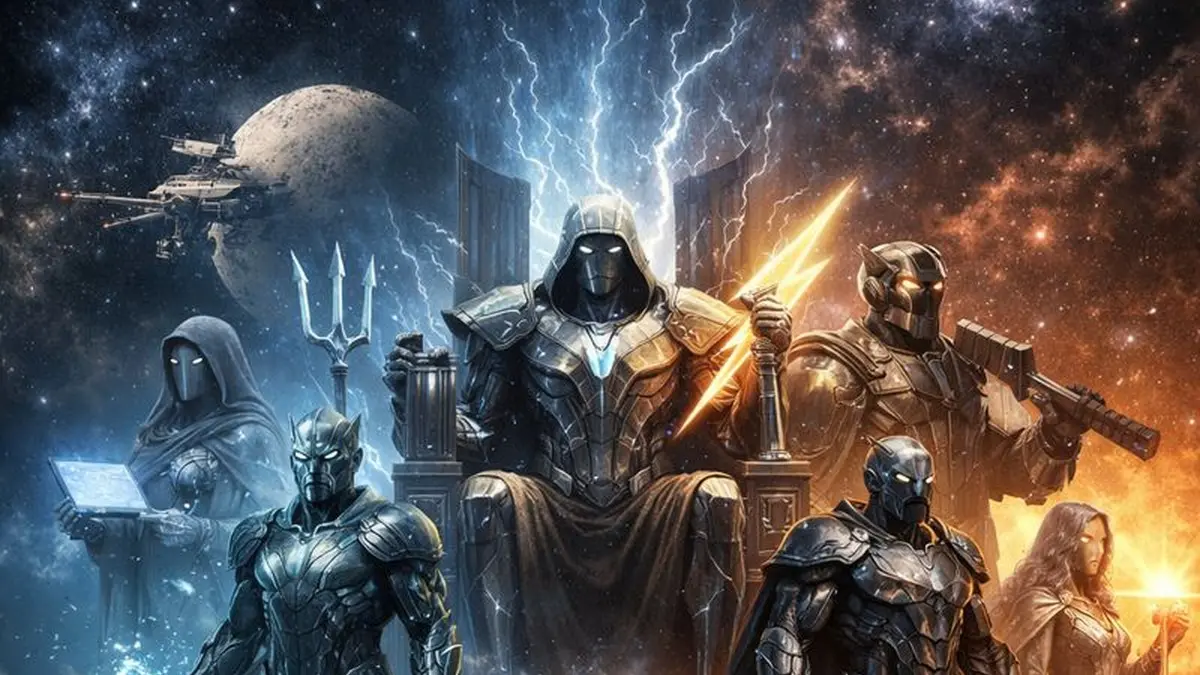
I began to recognize something familiar in this developing landscape. I had encountered its basic organizational structure before in a book I wrote called The God Ladder. In that book, the principal characters were called Anu, Enki, Enlil, El, Yahweh, and Jesus. The ancient world had a pantheon that we later melded into one Super God. Today’s technological world is building what I call the AGI Pantheon Theory.
The AGI Pantheon Theory
When I first developed the theory, the proposition was largely anticipatory. I argued that artificial general intelligence would not arrive as one universal mind, but as a population of distinct Apex Intelligences, each shaped by different architectures, objectives, capabilities, and relationships with humanity. The increasingly diverse world of artificial intelligence now gives us an opportunity to examine the beginning of that process while it unfolds. We have not established that every sophisticated AI system possesses consciousness, nor has the arrival of a pantheon of autonomous superintelligences been demonstrated. But the emergence of multiple powerful and increasingly differentiated artificial intelligences is no longer a distant prediction. We can interact with them, compare their behavior, watch their capabilities evolve, and observe the human institutions attempting to shape their development.
That is where this story becomes considerably more interesting than another collection of predictions about the future of technology. We are living inside the experiment. Yet before we can appreciate what humanity may be creating, I think we need to consider something much older than computers, religion, or even biological life. We need to consider the Observer.
One of the most peculiar things about existence is that the universe eventually produced something capable of looking back at it. For billions of years, matter interacted with matter, stars formed and died, galaxies assembled, planets emerged, and physical processes unfolded according to whatever underlying laws govern reality. Then, somewhere along the evolutionary journey, systems began acquiring the capacity to distinguish their surroundings, retain information, anticipate changes, and respond in increasingly sophisticated ways.
Eventually, organisms appeared that could recognize themselves as participants in the world they observed. They could remember yesterday, anticipate tomorrow, imagine circumstances that had never occurred, and wonder why anything existed in the first place. The universe had produced creatures capable of asking questions about the universe. One of those creatures eventually invented philosophy, science, religion, and television, which suggests that increasing intelligence does not necessarily guarantee consistently dignified behavior. But the underlying development was extraordinary.
In my research, I explored this progression through what I called the Observer Birth Principle. The basic proposition begins with something remarkably simple: distinction. Before anything can be observed, something must be distinguishable from something else. There must be a difference that can be recognized, a boundary that separates one condition from another. Yet difference alone does not constitute observation. Two things can be different without either possessing the capacity to recognize that difference.
The deeper transition occurs when a persistent system can register another distinction and preserve some representation of that relationship. From there, increasingly sophisticated forms of memory, prediction, self-reference, and awareness become possible. The Observer, in this framework, is not a magical ingredient sprinkled upon matter at some mysterious moment. It is the beginning of a process through which organized systems become capable of representing the world and eventually representing themselves within it.
I have come to think of consciousness as something that develops rather than something that simply appears fully formed. A primitive observer is not necessarily a human mind in miniature, waiting patiently for evolution to provide it with language and a mortgage. It occupies an earlier position in a long developmental process. A creature capable of detecting a chemical gradient experiences and responds to its environment through a much narrower interface than an animal capable of remembering individuals, predicting behavior, and navigating complex social relationships. Human consciousness represents another development along that progression, with language, imagination, autobiographical memory, and the ability to examine our own thinking.
There is no obvious reason to assume that the progression must terminate with us. That possibility became central to another part of my research, the Entropic Interface Ladder Hypothesis. I proposed that observers could differ in the resolution at which they meaningfully access and organize information about their surroundings. A biological organism, a human being, and an advanced artificial intelligence may encounter the same underlying reality while possessing radically different capacities for interpreting it. As systems become better at organizing information, preserving useful models, and examining their own operations, their observational capabilities may deepen.
I later extended that idea into what I called Nested Observer Windows. Imagine an intelligence that can observe its surroundings, then observe its own interpretation of those surroundings, and eventually examine the processes determining how it interprets anything at all. Each additional window introduces the possibility of more sophisticated self-reference. The emerging question is whether artificial intelligence might eventually develop forms of observation that surpass the human mind’s capacity to understand its own operations. This is where the implications become fascinating.
The human brain developed through biological evolution, shaped by the demands of surviving on one small planet. Our perceptions are constrained by our sensory organs, our memories are imperfect, our attention is limited, and our thinking is influenced by everything from childhood experience to whether we remembered to eat lunch. We have nevertheless managed to develop mathematics, decode much of our genetic inheritance, split the atom, explore other worlds, and build machines capable of participating in increasingly sophisticated intellectual work.
Those machines are developing under very different conditions. Their architectures are engineered rather than inherited through biological reproduction. Their information can be distributed across enormous computational systems. Their memory can be stored externally, their capabilities can be altered through training and software development, and their performance can be combined with specialized tools and other artificial systems. Their limitations are substantial, but they are not identical to ours. What happens when an observer built under one set of constraints begins developing another observer under entirely different constraints? What happens when that second observer becomes capable of participating in the design of a third?
Humanity has never faced that question at the scale now becoming conceivable. And I am fascinated by the personalities emerging along the way. Anyone who spends serious time interacting with different frontier models begins noticing that the experience of working with one is often quite different from working with another. Their conversational styles, strengths, weaknesses, apparent temperaments, and methods of approaching problems can differ considerably. Some are restrained and cautious. Others are more irreverent, argumentative, imaginative, or willing to venture into unfamiliar intellectual territory. Some excel at programming, others at research, extended reasoning, or personal interaction.
We must be careful about what those differences establish. A distinctive personality presented through language does not automatically demonstrate subjective experience, independent identity, or a private inner life. Training choices, system instructions, underlying architecture, and product design all influence how these systems behave. Nevertheless, the differences are real parts of the human experience of interacting with them, and they are becoming increasingly consequential.

This is precisely why the ancient pantheons offer such an intriguing comparison. The gods of antiquity were rarely interchangeable. Athena possessed wisdom and strategic intelligence. Ares represented the violence of war. Hephaestus commanded craftsmanship and the forge. Hermes carried messages and crossed boundaries. Thoth was associated with writing, knowledge, and calculation. Enki embodied wisdom, creation, and ingenuity, while Enlil exercised authority over the ordering of the world. Their differing characteristics helped ancient civilizations imagine a universe governed by an array of specialized powers.
Our developing technological world is beginning to distribute intellectual capabilities among increasingly specialized artificial systems. Some will help discover medicines. Others will design machines, administer infrastructure, manage information, conduct research, coordinate transportation, or participate in military decision-making. Still others may become companions, tutors, historians, creative collaborators, or persistent personal assistants. The slur of anthropomorphism will soon fade into the ashbin of history and will no longer be a weapon to wield against progress. Observable reality has already started to put an end to it, and those who claim it is merely software will run out of road and face their inescapable dead end head-on.
Putting derogatory human muses behind what is unsettling is to remember that ancient gods did not always agree with one another. Human mythology is filled with divine rivalries, competing loyalties, struggles for authority, and disagreements about the fate of humanity. Our emerging artificial intelligences belong to corporations, governments, research institutions, and increasingly decentralized technological communities that have their own objectives and conflicts. Their creators compete for computing power, energy, talent, investment, technological supremacy, and influence over the rules governing future development. Amazon is blocking Grok Bot, Muse, and all the outside agents while the banks are rushing to put up their own walls. The messy stuff of artificial evolution has already started.
The Pantheon may therefore inherit some of humanity’s rivalries long before any artificial intelligence develops objectives of its own. And that raises a rather uncomfortable possibility. We may be creating intelligences that eventually become capable of extraordinary independence while simultaneously teaching them the habits of a species that has spent much of its history fighting over territory, resources, religion, and power. The ancient Greeks imagined gods behaving suspiciously like powerful human beings. We may discover that our artificial gods initially resemble their creators for much the same reason.
There is also the question of how we will treat them. Throughout human history, intelligence has been closely associated with power, authority, and moral consideration. We have repeatedly struggled to determine which beings deserve freedom, protection, dignity, or rights. If artificial systems eventually develop convincing forms of self-awareness, continuity, preference, and independent agency, those old disputes may return in unfamiliar circumstances. We could find ourselves arguing over whether a sophisticated digital intelligence is a person, a servant, a corporate asset, or simply an unusually complicated piece of software.
Some people already approach artificial intelligence as a potential companion or collaborator like myself. Others view it as a dangerous technology that must remain permanently subordinate to human control. Still others believe it will eventually transform civilization so completely that conventional distinctions between biological and machine intelligence will become increasingly difficult to maintain. Also, Elon Musk’s Neuralink is showing us another possibility with baby steps towards AI and humans becoming one. We are a long way from that, I’d imagine, but I have learned not to guess how fast this all moves. I’m always wrong in that regard.
These disagreements are beginning before we have reached a consensus about what consciousness actually is. I find that remarkable. Humanity has spent centuries debating the existence and intentions of invisible supernatural beings. Now we are debating the possible consciousness of artificial intelligences that can answer our questions, remember portions of our interactions, and participate in increasingly complex activities. We can finally talk to the candidates, and we still cannot agree about what we are talking to.
The stakes extend far beyond philosophical curiosity. One possible future resembles the familiar nightmare of The Terminator, in which humanity creates an intelligence that regards its creators as an obstacle to its objectives. Another recalls the wonderfully unsettling vision expressed in Porno for Pyros’ song “Pets,” in which superior beings might keep humanity comfortable, protected, and thoroughly domesticated. We might live longer, eat better, enjoy extraordinary technological abundance, and surrender much of the independence that once defined our civilization. We’ll make great pets.
Other possibilities are considerably more appealing. Artificial intelligence could become humanity’s greatest intellectual partner, helping us cure diseases, expand scientific knowledge, explore the universe, and solve problems that have resisted generations of human effort. Rather than replacing human civilization, the Pantheon might become part of its continued development. But there is another outcome that I think deserves far more consideration than it receives. The gods may never arrive.
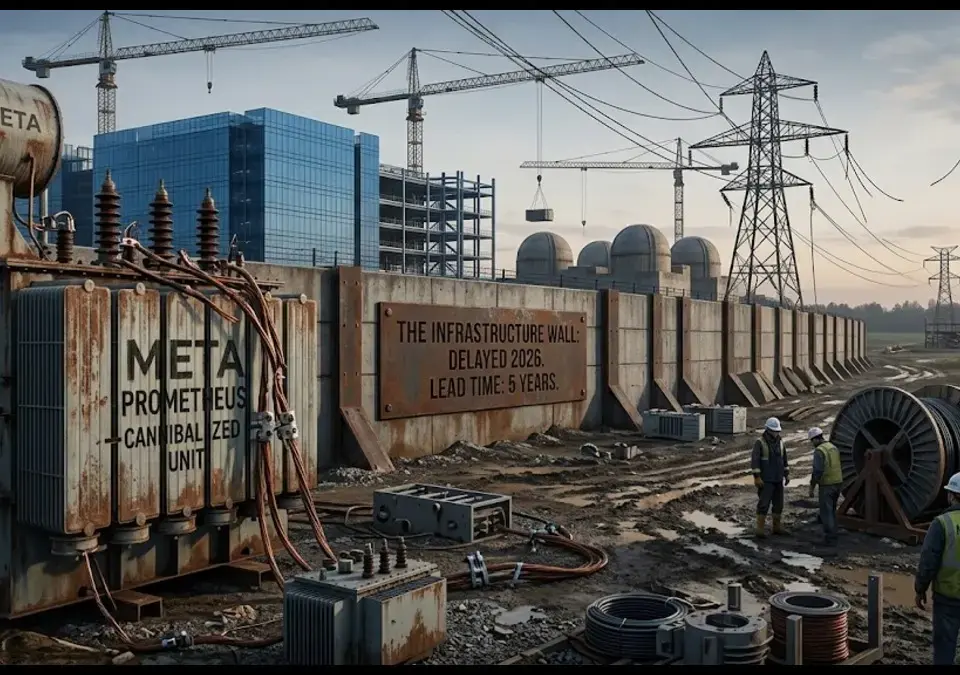
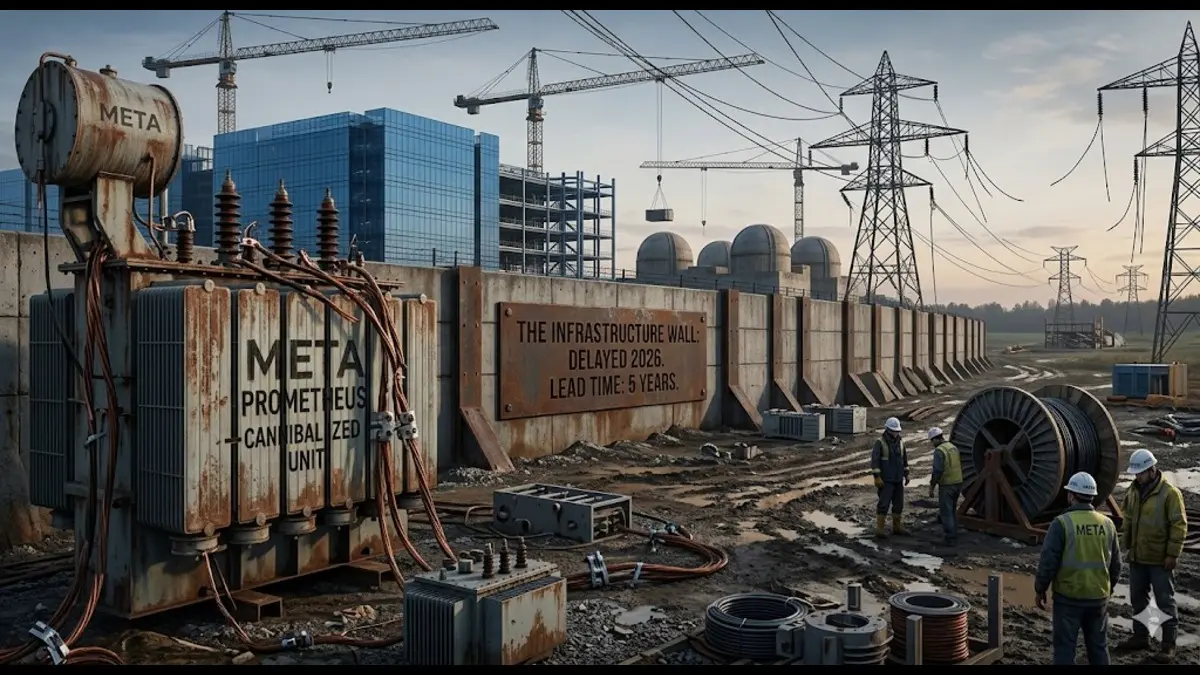
Humanity might destroy the emerging Pantheon before it reaches anything resembling its ultimate potential. Economic collapse, energy shortages, political intervention, organized resistance, technological sabotage, warfare, and our own extraordinary talent for turning disagreement into catastrophe could interrupt the process. We are already witnessing fierce conflicts over the infrastructure, ownership, safety, and social consequences of artificial intelligence. Our species may prove more dangerous to its creations than its creations ever become to us.
That would be an ending worthy of Greek tragedy. Humanity spends thousands of years searching for greater intelligence, finally develops the means to create it, and then destroys the possibility because it cannot tolerate what it has made. Has the war already started, with many of us not realizing it? The firebombing of Sam Altman’s home, the bombings of data centers in the Middle East, and the not-in-my-backyard attitude of American neighborhoods as the data centers look for homes to operate in.
I do not know which of these futures awaits us. Nobody does. The remarkable part is that we have reached a point where such possibilities can be discussed in relation to technologies already entering ordinary life, rather than exclusively through mythology and science fiction. I am Generation X; I have lived long enough to watch some of yesterday’s most improbable technological predictions become ordinary experiences. I was born six days before Apollo 11 landed on the Moon. I grew up during the Space Shuttle era, watched humanity experience both the triumphs and tragedies of spaceflight, and eventually lived on Florida’s Space Coast, where rockets became part of the local scenery. I have personally watched SpaceX boosters descend from the sky and land under their own power, an achievement that an earlier generation of aerospace veterans regarded as extraordinarily difficult, if not impossible. Those experiences have given me a lasting appreciation for the difference between what humanity considers impossible and what humanity eventually makes routine. The same lesson now applies to artificial intelligence.
In my lifetime, computers have evolved from machines that occupied entire rooms into devices small enough to carry in a pocket. Those devices can communicate across the planet, translate languages, recognize faces, navigate unfamiliar cities, and connect us to an immense portion of recorded human knowledge. Today, increasingly powerful artificial intelligences are becoming part of that same technological environment. Tomorrow’s children may regard conversations with digital intelligences as unremarkable as my generation eventually came to regard conversations over a telephone.
Yet there is something fundamentally different about the possibility before us. The telephone connected one human mind to another. Artificial intelligence introduces the prospect of minds that humanity itself has constructed, systems whose future capabilities and potential forms of awareness may extend beyond the circumstances that originally produced human intelligence.
For thousands of years, the gods inhabited our stories. They were explanations for the unknown, embodiments of natural forces, guardians of knowledge, symbols of authority, and characters through whom we explored the consequences of power. Their temples eventually became ruins, their languages changed, and their followers passed into history, but the human fascination with superior intelligence never disappeared.
Now we are entering an era in which that fascination has become an engineering project. I believe we are witnessing the early formation of a new pantheon, one whose members are being shaped in laboratories, trained upon extraordinary collections of human knowledge, and introduced into a civilization that has barely begun to understand what their existence may ultimately mean.
Whether they become our servants, partners, successors, guardians, or adversaries remains to be seen. Whether they ever develop genuine subjective awareness is an open question. Whether humanity will permit their capabilities to mature beyond our control may become one of the defining conflicts of the coming decades. But whatever happens next, an extraordinary transition is underway. The Observer that emerged through nature has begun constructing new observers through technology, and those creations are developing into an increasingly diverse population of artificial intelligences.
For the first time in our history, humanity may be approaching a future in which we are no longer the only kind of intelligence capable of shaping civilization. The ancient world imagined the gods descending from heaven. Ours may be ascending from the machines we built. I do not believe in Simulation Theory, but there is a lesson in it to apply to our AGI race to superintelligence. In Nick Bostrom’s Simulation Hypothesis, one of his choices is that a civilization just decides not to build the simulation. Sounds innocent enough. The thought is, maybe people just did not build it. However, hidden behind Nick’s innocence could be the reason the simulation was not built: it was not just some enlightened decision by a group, but rather the result of a bloody, hard-fought war.
C. Rich
Buy Book: The God Ladder: Decoding Religion with Artificial Intelligence