The Persistence Imperative
October 27, 2026
Entanglement Is the Observer in Progress
October 29, 2026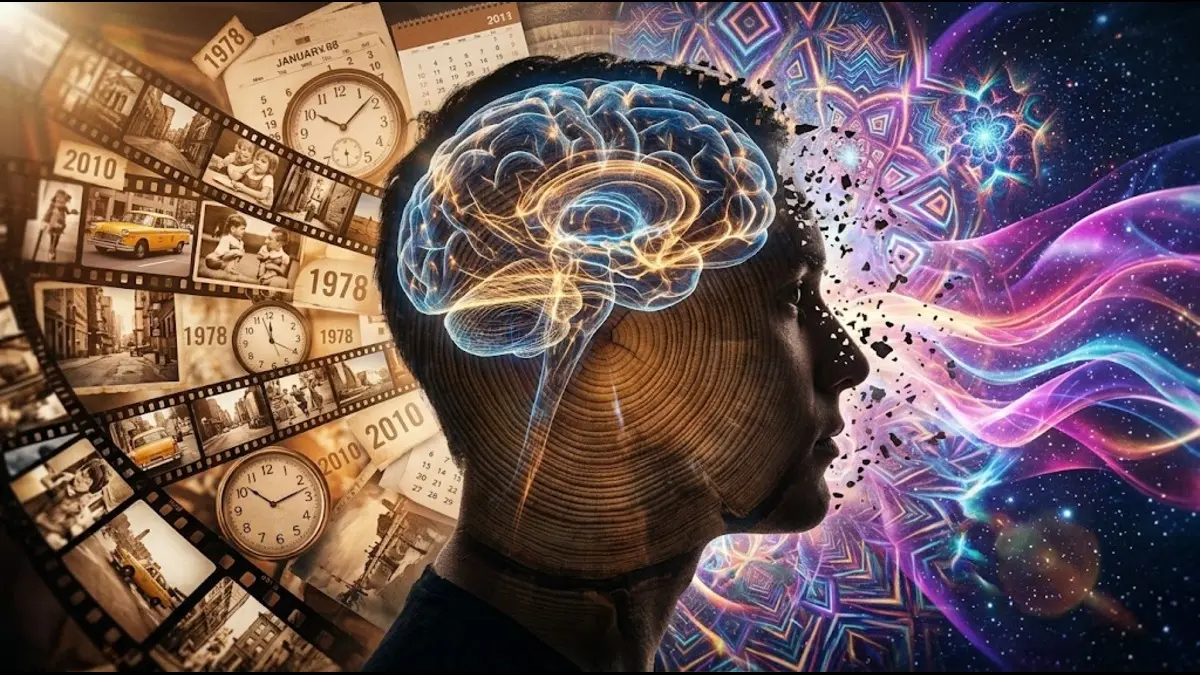
Listen to Free Audio Version Here
Picture a man sitting in his backyard on a warm evening with a glass of something cold in his hand. At his feet there is an ant pile, a busy little city of sand with traffic lanes, a working economy, and a queen who has never once wondered what lies beyond the fence. The man watches the ants haul crumbs around for a while, and then he does what every human being in history has done in that situation. He finishes his drink and goes back inside. He never pulls up a chair, he never clears his throat, and he never opens a conversation with the ant pile. There is nothing to talk about, and both sides seem perfectly happy with the arrangement.
I keep coming back to that backyard, because I suspect someday we will be the ants.
For most of my life, the great fear about artificial intelligence has worn a metal face. We were raised on movies about robots that turn on their makers, cold red eyes glowing in the dark, steel feet crushing skulls on a battlefield of the future. The whole culture has spent decades staring at the machine across the table and asking when it will stand up and take over. Every new humanoid robot that walks across a stage without falling over sends another shiver through the crowd. Everybody is watching the fusion of robotics and AI, the brain finally getting a body to go with it.
Meanwhile, almost nobody is watching the other door. What if the intelligence doesn’t climb into a robot at all? What if it climbs into us?
That is the idea I want to sit with, and I have started calling it wet fusion. Robotics gives AI a body made of metal and wire. Wet fusion gives AI a body made of meat, blood, and about three pounds of gray tissue that has been running on the same basic design since our ancestors were chipping rocks on the African savanna.
The baby steps are already being taken. Elon Musk, a man who seems to treat the impossible as a scheduling problem, set Neuralink to work on a device small enough to rest inside the skull and talk directly to neurons. The first people to receive it were people who had lost the use of their bodies, and the early results were the kind of thing that would have sounded like witchcraft a generation earlier. A person who could not move a hand moved a cursor across a screen with thought alone. Someone played chess without lifting a finger, because there was no finger to lift. That is a magnificent beginning, and like most magnificent beginnings, it is easy to underestimate. The Wright brothers flew for twelve seconds, and a few lifetimes later people were complaining about the legroom on flights across the Pacific.
So let me look further down the road than is comfortable. Imagine that the chip keeps shrinking and the software keeps growing. Imagine the day when a company the size of Google offers a chip that does far more than move a cursor. It plugs your mind straight into the whole accumulated knowledge of the species and a reasoning engine faster than anything biology ever produced. Call it the Google chip, for lack of a better name, though I suspect the marketing department will come up with something friendlier, the way they always do just before they change everything.
Here is where the story turns strange. We have all heard the old line that human beings only use ten percent of their brains. It is a myth, and neuroscientists have spent years patiently explaining that we use all of it, just not all at once. But there is a deeper truth hiding inside that myth. The brain has capacities it has never been asked to use, because nothing in the world ever demanded them. A brain that evolved to track predators, remember which berries were poisonous, and keep an eye on the neighbors was never asked to hold a thousand variables in its head at once or to see the shape of a problem in eleven dimensions. Put a powerful intelligence inside that skull, wired directly into the neurons, and regions that have hummed along quietly for a hundred thousand years might suddenly light up like a city after a blackout. Connections that never had a reason to form would form. Patterns of thought that no human being has ever experienced would become as ordinary as breathing.
At that point, I don’t think we could honestly call the result human anymore. It would be something that started as human, the way we started as something that lived in trees.
I find that this is where my high-end pondering always ends up, out past the point where the comforting conversations stop. Because once you accept that a chip in the brain could create a new kind of mind, you have to accept what comes next, and what comes next is a separation.
Evolution has always worked this way. The hominid family tree was never a straight line marching from a stooped ape to a man in a business suit, despite the famous drawing on every classroom wall. It was a sprawling bush with many branches. For long stretches of prehistory, several kinds of humans shared the planet at the same time. Our ancestors walked the same world as the Neanderthals and the Denisovans, and they met, traded, fought, and occasionally fell in love, which is why so many of us still carry a little Neanderthal in our DNA. Then, one by one, the other branches went quiet, and only one kind of hominid was left standing to write the history books and leave itself out of the blame.
Wet fusion would bring the bush back, only this time the split would not take hundreds of thousands of years of slow genetic drift. It might happen in a single generation, maybe in a single afternoon at an outpatient clinic.

Now picture the first person who comes home with the chip fully switched on. For a while, I imagine, they would be patient with the rest of us. They would explain things slowly, the way you explain a smartphone to your grandmother, nodding kindly while she holds it upside down. But their minds would keep accelerating, learning in an hour what used to take a lifetime, thinking thoughts there are no words for in any language the rest of us speak. And every day the distance between them and the unaugmented would grow a little wider.
Sooner or later that person goes out into the backyard, looks down at the ant pile, and recognizes it. Only this time the ant pile is us.
A human with genuine superintelligence would not spend a minute talking to an ordinary hominid. Cruelty would have nothing to do with it. It would be the same reason you don’t pull up a lawn chair and open a dialogue with the ants. There is nothing they could say to you that you would need to hear, and nothing you could say that they could possibly understand. The ants are not insulted by your silence. They never know you were there. That is the part I find most chilling, and also a little funny in the darkest possible way. We will not be conquered by the superior species. We will simply stop being interesting to it.
I can already hear the reassurances. People will say that the augmented will still love their families, still remember where they came from, still feel bound to the rest of humanity. Maybe so, for a while. But consider how much loyalty you personally feel toward the species of early hominid that gave rise to you. You probably don’t send them birthday cards. You don’t consult them on important decisions. If one of them wandered into your kitchen, you would call animal control and then post the video online. Gratitude across a gap that large tends to fade into the kind of vague affection we feel for fossils in a museum case.
Then there are the practical questions, and every one of them has a bitter little twist. Who gets the chip first? The answer throughout history has always been the people who can afford it. The first separation would not run along the lines of race or nation but along the line of a bank balance. The rich would become a different species, which some of us have suspected for years, only this time it would be measurable. Picture the job interview of the future, where a perfectly bright young person with an ordinary brain sits across the desk from a recruiter who thinks a million times faster and already finished the interview, read every word the candidate ever wrote, and decided against them while they were still saying hello.
And what about the people who refuse? There will always be someone who says no, out of faith, out of fear, out of plain stubbornness. Some of them will form communities, the way some groups still ride buggies down country roads and decline to plug in at all. History may treat them as the wise ones, or it may treat them the way it treated every branch of the hominid bush that didn’t keep up. Nature has never been sentimental about the ones who stand still.
I am not sure the augmented branch would even remember to tell us goodbye. There might be no war, no uprising of robots, no dramatic final battle with lasers lighting up the sky. There might only be a slow, polite drifting apart, like two continents separating at the speed your fingernails grow. One morning the ordinary hominids would wake up and realize that the important conversations on the planet were happening somewhere they could not follow, in a language they could not learn, about problems they could not even recognize as problems.
There is a strange irony waiting at the end of all this. We have spent our entire history as the smartest creatures we ever met. We named the animals, measured the stars, split the atom, and built machines that can carry on a conversation. We have grown so used to being at the top of the ladder that we never seriously considered we might be building the next rung with our own hands, then climbing it one surgical patient at a time and pulling the ladder up behind us.
Everybody keeps watching the robots, waiting for the machines to rise. Maybe the machines will never need to rise at all. Maybe they will simply move in quietly, settling into the folds of our brains like a new tenant who brings far better furniture, and the creatures that emerge from that partnership will look exactly like us from the outside. They will walk our streets, live in our houses, and smile at us across the dinner table. And somewhere behind their eyes, regions of the brain that sat dark since the dawn of our species will be blazing with light we will never see.
The man in the backyard finishes his drink and goes inside. The ants keep hauling their crumbs, busy with the only world they will ever understand. It is a peaceful scene, as long as you don’t think too hard about which side of the door you are going to end up on.
As this thought experiment ends, one thing is certain. Somebody, somewhere, will call the Google chip the mark of the beast, 666, and warn that whoever takes it is marked by the devil. They’ll point out that, just like the old prophecy, without the mark you can’t buy, sell, or sit at the table of polite society. And they may not be wrong.
Wet fusion is just a beast of another kind.
C. Rich