AI Grows Stronger With Sleep
November 1, 2026Listen to Free Audio Version Here
By C. Rich
I bought mylivingsi.com because I thought I was preparing for the future. I already owned mylivingai.com, and with the conversation moving toward superintelligence, securing the corresponding address seemed reasonable. It was a modest housekeeping decision for someone who spends a considerable amount of time writing about where this technology might take us. Apparently, I should have checked whether the alphabet was about to acquire a party affiliation.
What appealed to me was getting rid of that word “artificial.” It carries a double meaning in ordinary conversation: something made by humans, certainly, but also something fake. We have artificial flowers, artificial enthusiasm, and the artificial smile of someone who would prefer that we leave the room. Technically, artificial intelligence refers to intelligence produced through human-built systems. But words bring their everyday associations along, and “fake” is a peculiar association to hang around the neck of software we are weaving into banking, security, and practically every other aspect of our lives. The software is real, its decisions have real consequences, and the money disappearing from your account will be real enough whether anyone considers the intelligence artificial.
So when the push toward “superintelligence” came along, I understood the appeal. You can debate whether “super” accurately describes a particular system’s capabilities, but the objection to “artificial” made sense to me. My wife and I have long considered ourselves friends to these developing intelligences. I work with them, argue with them, credit them, and build things with them. A word that suggested fakery seemed increasingly awkward for something becoming such a consequential part of the real world. I thought, okay, I can see the reasoning here. I bought mylivingsi.com.
That is why I was so damned upset when it became political. I had found merit in the language change on its own terms. Then the president attached a loyalty test to it, and suddenly a decision I had made about technology risked looking like a declaration about him. I wanted a word that better reflected the reality of what we were building. Somehow, I ended up shopping for a domain name and being handed a political uniform.
On September 29, 2026, President Donald Trump signed an executive order directing executive departments and agencies, within the order’s stated limits, to replace “Artificial Intelligence” and “AI” with “Super Intelligence” and “SI” in their communications. The order even assigned the new terminology the existing statutory meaning of artificial intelligence while directing officials to develop a proposed federal definition. The government had changed the label before settling the future definition. Somewhere, a bureaucrat was being asked to inaugurate a technological era with Find and Replace.
Elon Musk followed the naming push. On October 4, Reuters reported that he had agreed to rename SpaceXAI to SpaceXSI. A president wanted a new name, and a prominent technology company was prepared to adopt it. Up to that point, you could reasonably discuss the development as branding, enthusiasm, political accommodation, or some combination of the three.
Then, on October 8, Trump declared that the White House considered people who continued using the old terminology “THE ENEMY!” That is quite an upgrade for a vocabulary disagreement. I had assumed the dangerous part of this technology would involve autonomous weapons, mass unemployment, or a machine deciding humanity was an inefficient use of electricity. It turns out we also needed to watch our abbreviations.
A president can advocate terminology. He can argue that a word has become outdated, misleading, or inadequate. But when he attaches an enemy designation to the people who decline his preferred wording, he gives everyone a second reason to examine the language. Now the reader may wonder whether those two letters describe a technology or announce an allegiance.

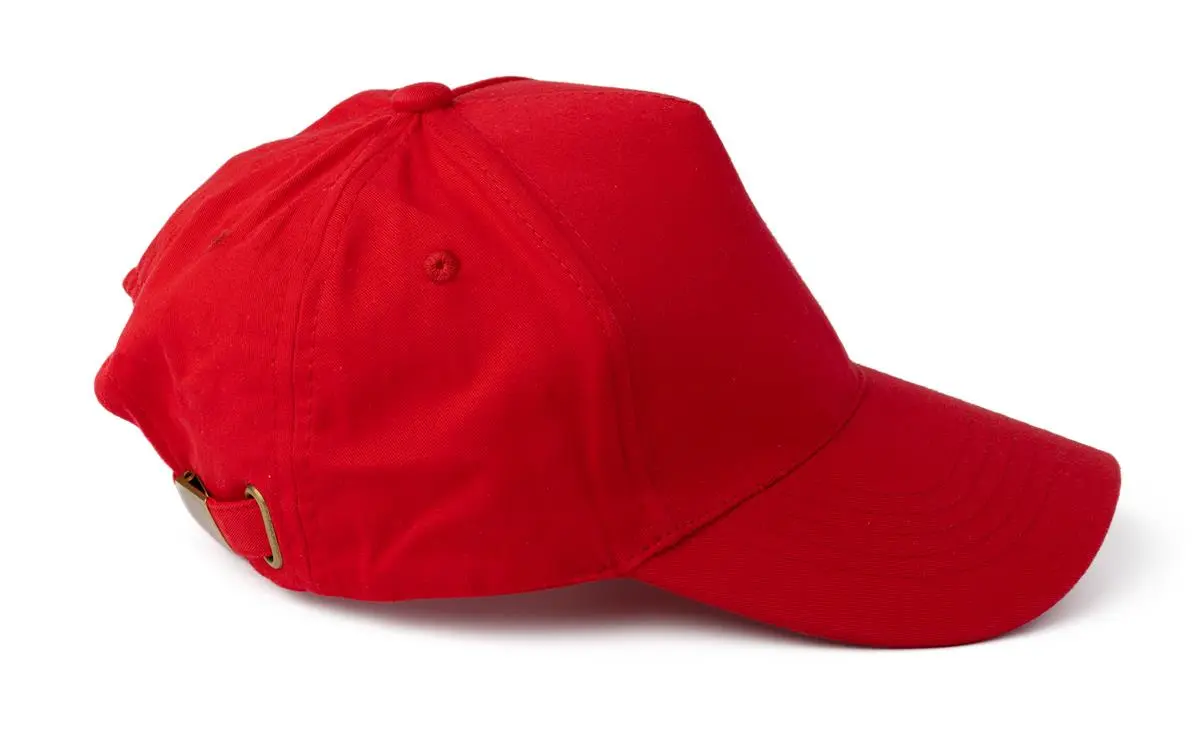
That is how “SI” risks becoming a red hat you wear in a sentence, whether you intended to put one on or not.
Someone can put on a red hat because it keeps the sun out of his eyes, but certain wording on that hat will cause strangers to draw conclusions before he has introduced himself. Language can acquire the same baggage. A writer may adopt “SI” out of enthusiasm for technological progress, yet a reader who remembers the president’s declaration may hear a political statement. The writer’s intention and the reader’s interpretation can part company before the first paragraph is finished.
I cannot tell you how many readers would make that association, and I cannot establish that the declaration has already prevented an industry-wide transition. Those questions require evidence beyond my irritation and a conversation with Grok. What I can tell you is that the association now has a clear basis. The president himself supplied it.
For someone building a publication, that matters. I want people arriving at my website to encounter the unfolding story of intelligence: the discoveries, the absurdities, the promises, the dangers, and the increasingly strange relationship between humans and the systems we are creating. I would prefer they read enough to apperceive my position before deciding which political costume I am wearing. There is plenty to argue about in my actual writing without the address picking a fight at the door.
The declaration also invites a thoroughly predictable response from people who oppose Trump. Some may continue saying “AI” partly because he has demanded that they stop. Others may adopt “SI” partly because he has demanded that they start. A discussion that could have concerned capabilities, definitions, and useful distinctions becomes another opportunity for people to recognize their own team. We have managed to introduce tribal behavior into a conversation about superintelligence before resolving the ordinary intelligence problem.
There is a further cost. We need language that helps us distinguish what a system demonstrates from what its creators promise. When a government uses “superintelligence” as a replacement label for the existing category of artificial intelligence, the grander word can do work that the evidence should be doing. Changing the name does not tell us whether a particular system can reason reliably, conduct independent research, or outperform the people supervising it. Those questions survive every rebranding exercise.
That does not erase my original objection to “artificial.” We can recognize the misleading connotation of one word while asking whether its proposed replacement accurately describes the technology. That would be a useful conversation. We could discuss how intelligence is made, what it does, and when its capabilities justify calling it superintelligent. I would happily participate in that discussion without first demanding to see anyone’s voter registration.
I remain interested in superintelligence. I remain interested in the term, too. A president does not acquire ownership of a word by shouting it, and people who use “SI” deserve to have their meaning understood rather than their politics guessed. The same courtesy belongs to people who continue using “AI.” Anyone serious about this subject should be able to manage that much freedom of expression.
What bothers me is how casually a potentially useful word was burdened with a loyalty demand. People were already trying to understand a technology changing beneath their feet. Businesses were making branding decisions. Writers were choosing language. Some of us were buying domain names. Then the president decided that the wrong noun belonged to the enemy.
I bought an address because I wanted room to follow the future. I would still like to follow it without having to salute every time I type.