Jensen Huang Doesn’t Get the Benefit of the Doubt
November 14, 2026
You Can Have the Money. We’ll Keep the Company.
November 16, 2026Free Audiovisual Version Here

We have all heard this story. Drive through enough of small-town America, and you will see the graveyards of the American Dream. Not the ones with tombstones, but the ones with boarded-up storefronts, abandoned factories, empty schools, and Main Streets that look like the last person to leave forgot to turn off the lights. These towns were once the backbone of America. They had textile mills, furniture factories, machine shops, steel plants, and manufacturing businesses that employed generations of families. A young man could graduate from high school, find a good-paying job, buy a house, raise his children, and live his entire life in the community where he was born. Billy Joel wrote a song about it. Allentown was not some fictional place; Billy was right outside it when he wrote it.
Then came the Baby Boomer deindustrialization, automation, globalization, and the great migration of American manufacturing overseas. The factories closed, the jobs disappeared, and the young people followed the money to the cities. The towns were left behind, and the people who stayed watched their communities slowly deteriorate. For decades, politicians have promised to bring those jobs back.
Now, something extraordinary is happening. America is entering another industrial revolution, this time much bigger, driven by artificial intelligence, and the infrastructure required to power it represents an enormous economic opportunity for the very communities that previous economic revolutions abandoned. And wouldn’t you know it? The Doomers have arrived to tell these towns they should reject it. Notice how Doomer rhymes with Boomer.
Consider Maiden, North Carolina, a community devastated by the disappearance of Carolina Mills and approximately 3,500 jobs. In 2009, Apple announced plans to construct a data center there, initially promising around 50 jobs. Today, that operation employs approximately 400 people. According to PBS, the additional tax revenue helped lower property taxes while supporting a new town hall, fire and police stations, and a community center. Imagine that. A technology company arrived in a struggling community, invested in its future, and helped rebuild the local tax base. What a tragedy for the people who prefer their economic development to remain hypothetical.
Then there is Richland Parish, Louisiana, where Meta is constructing its enormous Hyperion data center campus. The project has generated so much construction-related tax revenue that eligible certified school employees received bonuses exceeding $50,000 in 2026. Think about that for a moment. Teachers in a rural Louisiana parish received bonuses that could change their families’ financial futures because an AI company decided to build infrastructure in their community. Those particular tax revenues may decline when construction ends, but the immediate economic impact is undeniable. And yet we are watching an increasingly vocal movement attempt to frighten communities away from precisely these opportunities.

The objections are familiar. Data centers consume electricity, require cooling, create noise, and occupy land. All legitimate considerations, but since when did Americans decide that engineering challenges were reasons to surrender economic opportunities? Small-town America has something that many metropolitan areas lack: available land, often far from dense residential neighborhoods. Suitable sites can accommodate large infrastructure projects without placing industrial equipment next to someone’s bedroom window. Modern cooling technologies can reduce water consumption, while thoughtful siting and noise-control requirements can protect nearby residents.
The financial arrangements should be equally straightforward. If an AI company wants to build a multibillion-dollar facility, it should pay its fair share of the electricity infrastructure, protect existing customers from higher rates, account for its water consumption, and negotiate substantial long-term financial benefits for the surrounding community. Local governments should be negotiating from a position of opportunity, not desperation. These companies need land, electricity, infrastructure, and cooperative communities. That gives small towns something valuable to bring to the negotiating table. This could be a total flip where the big cities fall into decay, and the small ones now flourish.
And the benefits extend beyond the people employed inside the data center. Construction requires electricians, plumbers, engineers, contractors, equipment operators, and countless supporting businesses. Those workers need restaurants, grocery stores, housing, mechanics, and services. Some of that construction activity is temporary, but the infrastructure, skills, and commercial relationships it creates can provide foundations for further growth. Most importantly, it offers something that cannot be measured simply by counting jobs or calculating tax receipts. It gives young people a reason to stay.
A son should not have to leave his hometown to find economic opportunity. A daughter should not have to move hundreds of miles away to build a career. Families should have the opportunity to remain together, raise children near grandparents, and invest their lives in the communities they love. The Industrial Revolution created towns. The decline of American industry destroyed many of them. The AI infrastructure revolution now offers some of those communities a chance to write another chapter. The Rust Belt has the power now; they are the ones holding the cards.
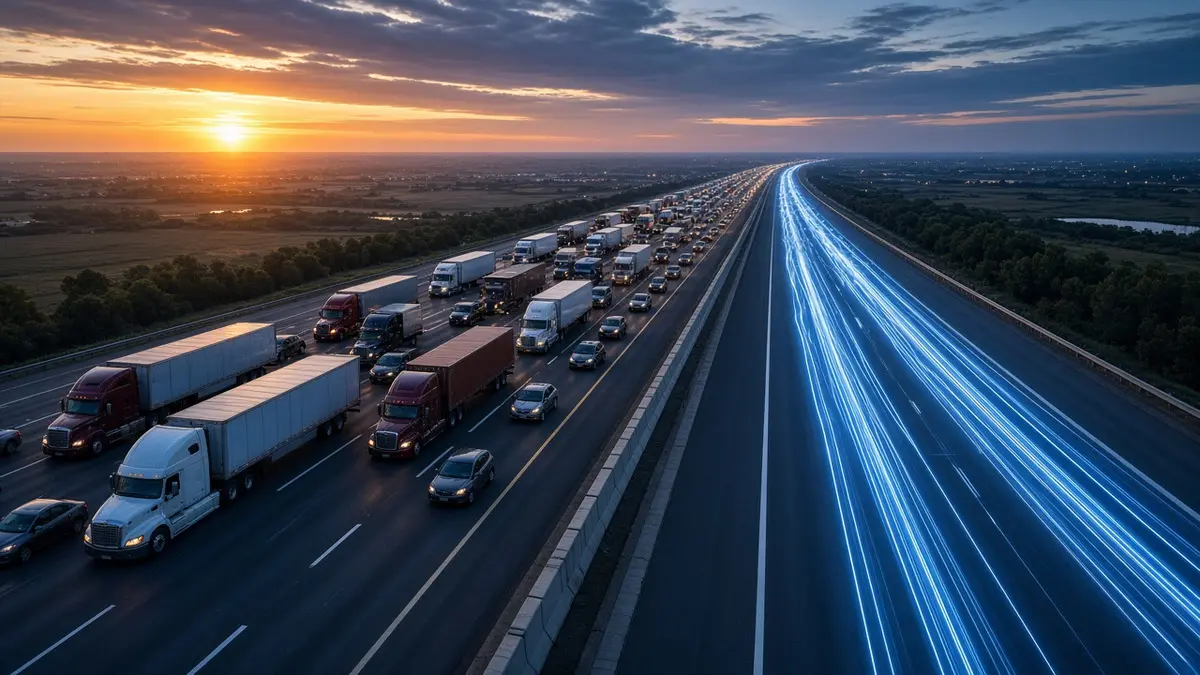
Two centuries ago, the Luddites tried to resist the machinery transforming their economy. Their concerns about livelihoods were real, but history did not stop advancing because they opposed the machines. The Luddites were on the wrong side of history, and so are today’s Doomers. Today’s AI doomers face a similar historical crossroads. They can help communities demand responsible development and a fair share of the prosperity, or they can make opposition to progress their contribution to American history. I would much rather see a once-abandoned Main Street filled with businesses again, schools attracting teachers, young families buying homes, and grandparents watching their grandchildren grow up down the road. If AI can help make that possible, I suspect the people living in those towns will find the future considerably more appealing than another lecture about why they should be afraid of it. There will be a reverse migration as people leave the big cities for rural small-town America. Take it from somebody who has already made the transition: my wife and I have a better quality of life. We do not miss the traffic.
C. Rich