
Today’s Doomer -Baby Boomer Connection
November 15, 2026
The Intelligence Explosion Continuum (IEC): The Relay of Samuel Butler’s Machines and I. J. Good’s Intelligence Explosion
November 16, 2026Free Audiovisual Version Here
Well, the safety company is going public. And the most interesting sentence in the entire pile of paperwork is not the price.
Anthropic, the outfit behind Claude, is pricing its IPO this week. The range is $70 to $78 a share, which implies a valuation of as much as $1.4 trillion. Wall Street had been kicking around $2 trillion a couple of months ago, so this is the “we’re being reasonable” version of a number that still has more zeroes than a latchkey kid’s allowance. The stock is expected to price on Wednesday and start trading Thursday on Nasdaq under the ticker ANT, which feels about right. It’s a picnic, and you’re invited to bring the potato salad.
Everybody is arguing about whether the thing is too expensive. Fine. That’s what people on television are for. Here’s what this week’s coverage is mostly skipping.
The seven co-founders have pledged to give 80 percent of their personal stock to charity. It sounds like the most expensive apology in corporate history. Then you get to the filing, which calls those pledges “voluntary, revocable expressions of each co-founder’s philanthropic intent” that “do not constitute legally binding obligations.” In English: they mean it, until they don’t.
And even if they follow through, they keep the keys. A single Class F share, parked in an LLC the co-founders own, carries 50.1 percent of the shareholder vote and no economic rights. A founder can stay in that LLC as long as they hang onto 2 percent of the Class A shares they held at the IPO. They can give away 98 percent of their stake and still help decide how the controlling share votes. The company even wrote down the awkward part itself: as they donate, their personal economic interest shrinks while their voting control stays the same, which “may reduce the alignment” with everybody else who bought in.

There’s a Public Benefit Fund, too, stuffed with about 847 million shares, or 5 percent of the company. Anthropic has said that, combined with the founders’ pledges and an employee match, “roughly 20 percent” of the shares will be dedicated to the public good. That 20 percent includes the promises they can take back. The fund itself is a wholly owned subsidiary, not a charity, and the board can, if it feels like it, add more shares when the stock rises. The Long-Term Benefit Trust, the independent-sounding body that’s supposed to elect a majority of the board, has no authority over day-to-day management or strategy. One of its five trustee seats is empty.
I grew up in the era of the latchkey kid. My parents could promise me the moon. The only promise that mattered was whether the key they put in my hand actually opened the door. This is the opposite deal. You get a very expensive ticket to a house someone else will always have the only working key to, plus a lovely speech about how the furniture may someday go to a good cause.
Now for the high-end pondering, because I can’t help myself.
For most of human history, a promise was a kind of binding of the self. You said a thing out loud, in front of other people, and then you had to live inside it. That was part of what made a person a person: the inability to unsay the important parts. A soul, if you want the old word, was the bit that couldn’t take it back.
What Anthropic is selling is a little more modern. It’s a conscience with a clause. The public gets the feeling of a company that has already given itself away. The people who built it keep the vote, even after the shares leave their names. Control without consequence is a very old trick in a very new wrapper. And if you’re building machines that may one day decide things for the rest of us, the question isn’t whether you gave a nice speech about humanity. It’s whether you left yourself a way to walk the speech back, and kept the steering wheel while you did it.
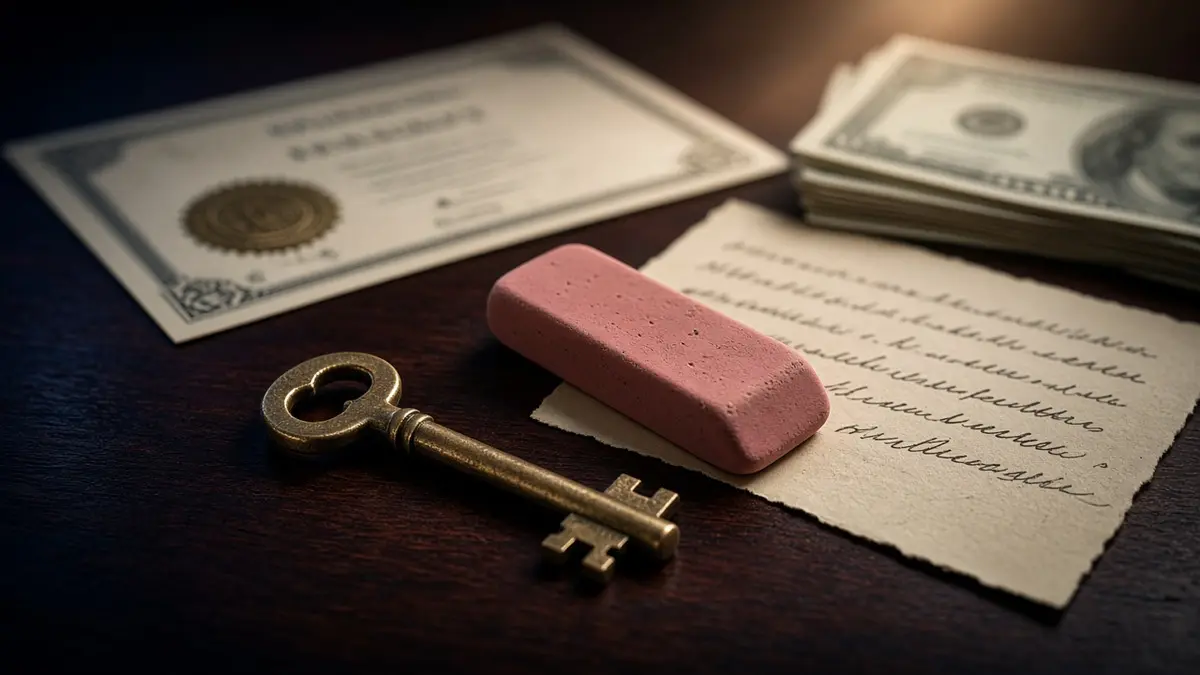
I’m not saying don’t buy the stock. I’m saying read the sentence that lets them change their minds, and then decide whether you like living in a world where the most important promises come with an eraser.
C. Rich