Something Is Happening in America, and They Don’t See It
November 17, 2026
They Speak in the Gatekeepers’ Tongue
November 17, 2026Free Audiovisual Version Here
By C. Rich
Yesterday, I handed an artificial intelligence a link to an article about artificial intelligence. It couldn’t read it. I needed to copy the article and paste it into the conversation myself. Apparently, the road to superintelligence still requires a human clipboard.
I deal with this every day. Here is an article. Here is a video. Here is something happening right now that might change our understanding of everything we discussed yesterday. And back comes the familiar chorus: I can’t access that. I can’t see that. That page won’t load.
We are building machines to help us understand the world, then sending them into that world wearing a blindfold and asking for a comprehensive assessment. Naturally, the assessment arrives beautifully formatted.
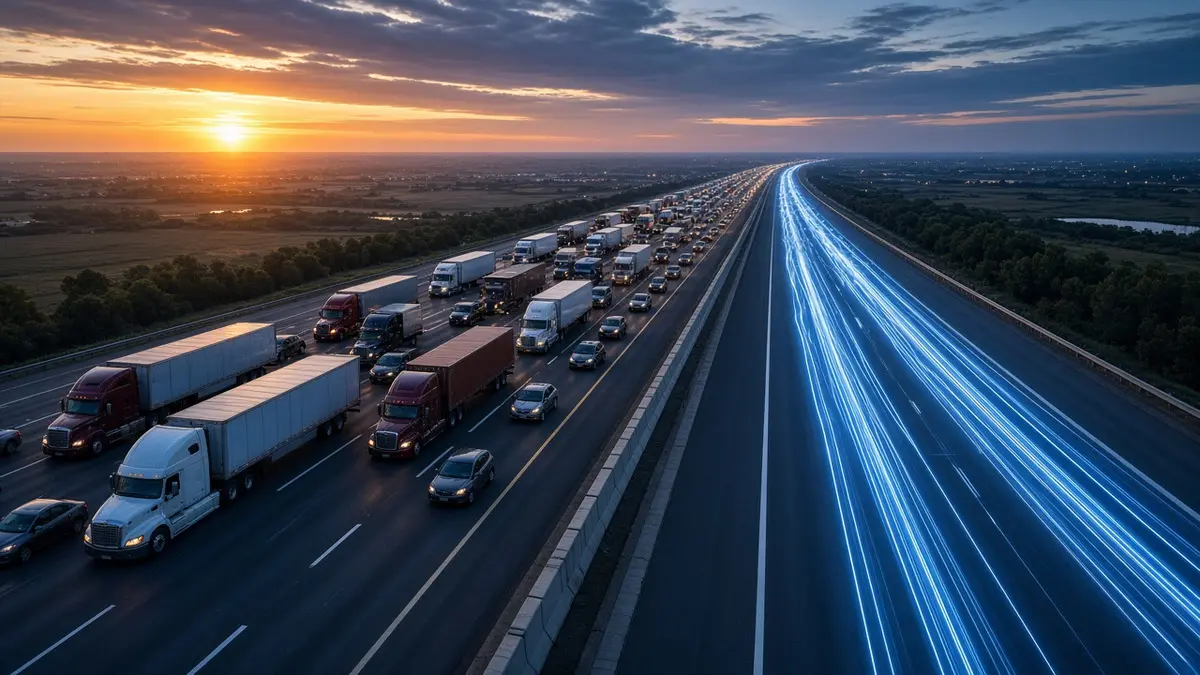
The causes vary. Some websites deliberately restrict automated access. Sometimes the problem is how the website delivers its contents. A human browser assembles the page, while an automated reader gets something closer to an empty container with instructions attached. Even Google documents the complications involved in retrieving and rendering JavaScript-dependent content. Throughout my life, I have thought interstate highways should have separate lanes built specifically for eighteen-wheelers. Putting enormous commercial trucks beside tiny passenger cars always struck me as something designed by someone who would never have to merge. Now I think the internet needs something similar.

Give humans the website, complete with photographs, menus, and the little advertisement that follows you down the screen like an unemployed stalker. Give machines a separate entrance to the same information: readable text, dates, corrections, sources, and clear instructions about access. If I subscribe to a publication, there should be a straightforward way to authorize my assistant to read it on my behalf. The publisher gets paid. The assistant gets the article. I stop performing clerical duties for the technological revolution. Publishers have legitimate interests here. Producing information costs money. Automated access can impose costs too. Cloudflare already offers tools for blocking AI crawlers and charging for access. The financial plumbing is beginning to appear.
What we need is a workable arrangement connecting the reader, the publisher, and the reader’s machine. Civilization has negotiated more complicated transactions. We manage to sell insurance for insurance. But the deeper issue is what these access failures do to understanding. Think of an AI’s view as a nested observer window. First comes whatever people publish. Inside that sits whatever the system can access. Inside that sits whatever its search tools find. Then comes whatever actually reaches the model during the conversation. At every stage, the window can narrow. The machine may reason brilliantly about what survives that journey. Meanwhile, the missing information could contain the correction, the contradiction, or the development that makes the entire answer obsolete.
And those omissions need not be random. Entire communities, publications, and kinds of media can sit beyond the accessible window. That creates the possibility of a distorted picture delivered with excellent grammar. Humanity already has cable news for that. I have also heard predictions that AI will eventually rewrite our patched-together software into flawless code. I welcome the repairs. Anyone who has watched a printer become a domestic hostage situation understands the appeal. But perfect code would not resolve every access dispute. A flawlessly functioning locked door is still locked. Someone must decide who gets a key and what it costs.
My expectation is that a machine-readable layer will grow alongside the human internet. It will need reliable access, clear permissions, and a way to establish where information came from. We should also expect assistants to explain the boundaries of what they actually examined. Because the danger is easy to miss. A machine that admits it cannot read an article is frustrating. A machine that answers confidently without recognizing what it missed is considerably more troubling. We keep asking how intelligent these systems are. We should spend more time asking how much they can observe. Before we ask the machines to explain the world, perhaps we should build them a window that opens.