Cosmic Garden Theory: What Survives Cosmic Transitions?
November 27, 2026
Behind SpaceX’s Owning Down to The Dirt
November 27, 2026 By C. Rich
The Math
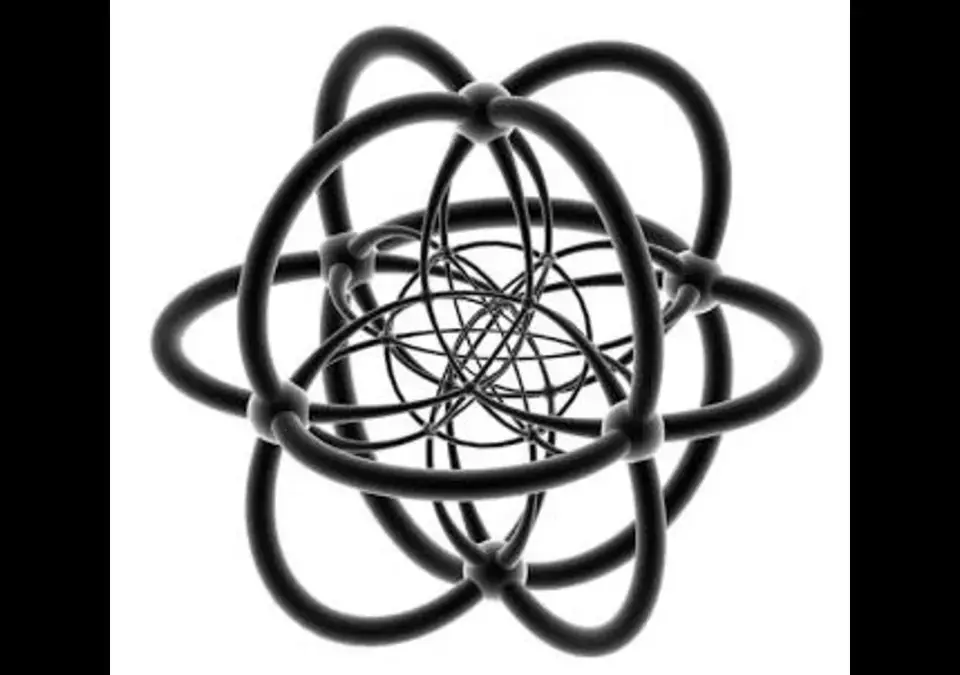
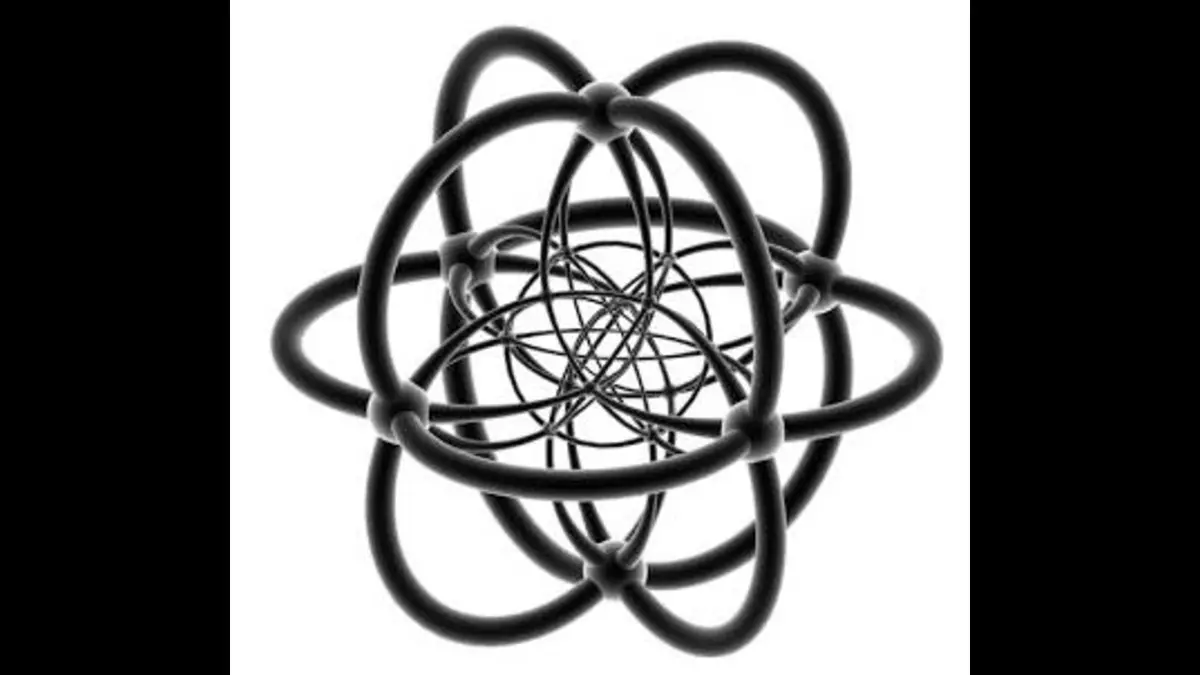
I owe a geometric object an apology. I named it Cosmological Pangaea, called it a theory, gave it a beautiful structure, and assigned it the modest responsibility of starting the whole damn universe. The geometry was mine to work out. The job description was something I gave it because I thought that was how the world began. After all the work I did in the Cosmic Garden, my name for the primordial world before the hot Big Bang and the theory I built to study it, I think I was wrong.
What changed my mind was watching much simpler shapes go through the Gate, the threshold where a model universe either makes it into expansion or doesn’t. I could vary the shape of a model universe, follow it into expansion, and measure something of its earlier shape still there after all that stretching. That last part mattered to me. I had put a great deal of thought into building an elaborate primordial object.
Meanwhile, a universe with considerably less going on could get through the Gate and come out the other side with a history you could still read. Somewhere in there I had to ask myself an uncomfortable question. What exactly had I hired Pangaea to do? Pangaea still exists as a mathematical object. I can describe its geometry. I have considerably less to say about where nature might have used it, if she ever did.
My own picture now puts elaborate physical structures like Pangaea much later in the story, after the hot Big Bang and, in the sequence I find persuasive, after the light we see today as the cosmic microwave background was released. The Garden gives me no way to date every possible geometry in the early universe. It gave me enough reason to retire my claim that this particular one started ours.
Retiring Pangaea didn’t leave me empty-handed. I think the Garden managed to add something to the Emergent Universe, the idea George Ellis and Roy Maartens put forward in 2004 that our universe didn’t explode out of a singularity at all. In their picture it spent an indefinitely long time sitting quietly near Einstein’s static state, a closed universe neither growing nor shrinking, until it eased its way into inflation.
Their account follows one universe through one exit. My question was what happens when the universe making that exit has a shape. Working past earlier results that only handled the simpler symmetric case, I followed fully lopsided geometries near that static state and found that shape helps decide the outcome. Two universes that look alike by the usual measures can go opposite ways, one into lasting expansion and the other into collapse.
The part I’m proudest of is what came after the exit. Push a shaped universe through the Gate into inflation, and its starting geometry doesn’t get erased completely. A trace of it comes through the transition, as if the universe kept the receipt. I call the bigger picture an emergent multiverse: not one quiet universe waiting to begin, but a Garden full of them, some making it out and some not, each carrying a little memory of the shape it started in. I can’t tell you that’s how ours began. I can tell you the Emergent Universe looks different to me now that I’ve watched more than one of them leave.
Cosmic Origami, another one of my theories, went with it. I had pictured our nearly flat universe unfolding from an intricate configuration, and I loved that idea. You could almost hold the thing in your hands and imagine opening it. What I saw in the Cosmic Garden Theory was stretching. A simple shape could expand enormously and retain a trace of how it had moved.
I could tell that story from what happened in the model. To tell the Origami story, I still had to supply the folds myself. Eventually, even the guy who came up with the name has to put the paper down. I also went back to my Engineered Universe Hypothesis, which I originally put out as a theory alongside the Simulation Hypothesis. If you’re willing to entertain the idea that somebody programmed the universe, I figured it was fair to ask whether somebody engineered a physical one.
What surprised me was how much the Cosmic Garden Theory reminded me of biology. Give something a set of conditions and let it develop. Small differences in its beginnings can matter to what it becomes. Some histories end in collapse. Others keep going. I looked for the hand of an engineer, the hand of God, anybody’s fingerprints. What I saw was nature.
Whatever happened in that primordial world, something came through it and continued to evolve. If somebody wants to tell me there was a hand behind the whole business, I have no idea what measurement could settle that argument.
Closer to home, I’m still happy with my Crest-Null Theory. That work began with a habit of looking at what happens to the people on the far side of a catastrophe. The disasters differ. A civilization can suffer a local collapse while the neighbors carry on, and an event can reach far beyond any one civilization. In every past catastrophe our species has lived through, somebody survived.
I realize the sample comes with a built-in bias. Here I sit. What interests me is what those survivors had to figure out all over again, and whether we could spare the next bunch a few thousand years of that aggravation. A crest is a peculiar place to live. Systems have grown sophisticated, people depend on them, and their very success makes it difficult to imagine them coming apart.
I keep wondering what an ordinary Roman would have picked as the day to start worrying. Presumably he had errands. That’s the part I recognize in us. We can look backward and identify half a dozen warnings before lunch. Living through a Tuesday and recognizing that this is one of the warnings seems to be a talent humanity has yet to master.
Crest-Null Theory also gave me room to trace what I called the God Ladder, the changing forms of human worship across the civilizations I studied. But the most practical question in that whole body of work was what we might leave behind on purpose. We have a chance to speak to people who may someday be standing in the wreckage of systems they never had to build. I’d like us to leave those people something better than a dead phone containing an excellent video on how to reinvent the wheel.
The work that occupies me now is the most extensive I’ve done. My Functional Consciousness Series runs to roughly fifty pillars of research and opinion on Zenodo and other outlets, which is a respectable amount of writing for a man still asking what the hell consciousness is. And something is connecting those pillars to the Cosmic Garden that I don’t think I’ve ever said plainly enough.

I think cosmology and consciousness belong to the same unfolding history. I used to approach consciousness as though, if I could get the question precise enough, I might locate the moment it happened. The longer I’ve worked on it, the more interested I’ve become in the process that could produce creatures with such different ways of experiencing a world.
Think of me, a dog, and a dolphin standing in for three very different answers nature has already given. Each of us came out of the physical history of this universe. Somewhere along the way, that history produced a man trying to imagine what it feels like to be a dolphin, with no reliable way of asking the dolphin how close he got.
That’s where cosmology runs straight into what philosophers call the Hard Problem. David Chalmers named it in the mid-1990s: the question of why physical processes in a brain should feel like anything at all from the inside.
I can follow a physical history toward a living brain. I’m still left wondering how the ocean feels to the animal swimming in it. I suspect consciousness is one of the things intelligence can grow into. I’ve argued for a while that intelligence follows the same path geometry takes as it unfolds, with information, math, and memory carried all the way up, and that it can develop in different combinations along the way.
Maybe I should have thought of a better name than Functional Consciousness. Cosmological (or cosmic) Consciousness sounds good, but after fifty pillars of research I already have a name. My Functional Consciousness refers to a system’s capacity to process information, maintain internal states or self-models, generate predictions, and adaptively guide behavior, with or without requiring subjective “felt” experience or what some call phenomenal consciousness.
My theory starts with what I call Axiom D. Pangaea didn’t make it through the Garden. The axiom did. What it means sounds simple, but it is anything but: B looks back at A, registers it, turns back around and moves towards C, all the way to you and me.
Artificial intelligence has given me the extraordinary opportunity to watch a new combinational process develop during my own lifetime. I see intelligence in these systems. Whether anything feels like anything to the silicon is an open question. And if some form of experience ever does emerge there, I see little reason to expect it to feel like being you or me. One of us each may be plenty.
Then there’s recursive self-improvement. If these systems get good enough at improving their successors, we may encounter a level of intelligence I can type words about and still utterly fail to imagine. The process could also stall. And if it does take off, there’s a question I explored in my AGI Pantheon Theory that keeps getting more interesting. How many of these things can the world sustain?
I can picture a handful of great intelligences developing separately like the ancient stories of the gods. I can also picture one getting far enough ahead that the others lose the investment they need to keep going. Take the old paperclip maximizer, the machine that consumes every resource on Earth to make paperclips, and swap the resource for money.
It may take all the money in the world to build one god, and every dollar committed to the leading system is a dollar somebody can’t spend keeping a rival in the race. Maybe the pantheon dwindles to one because, somewhere in the middle of the coming of the gods, somebody in finance opens a spreadsheet and says, “We can afford one god.”
That’s where the Biblical Matthew comes in. When I say I feel like Matthew, I mean Matthew as tradition has him, the fellow trying to get the story down while the people around him are still arguing about what it means. I’m Matthew in the time of the coming of the gods, or God, and I can’t even tell you yet whether that sentence needs the plural.
I write about artificial intelligence as it happens because years from now the outcome may look so obvious that nobody remembers what it was like when several futures still seemed possible. I’d like there to be a record from somebody who was here and genuinely didn’t know.
For now, my cosmology work has reached its end. I think I was able to add something to Emergent Universe Theory. If something turns up that casts new light on the Cosmic Garden, I know the way back. I laid many of my theories to rest in the Garden. I could also spend years finding more Crest-Null stories.
But every morning I wake up in the middle of the one story I’d have given anything to witness if I’d been born a century earlier or later. I have a front-row seat to the end of the world or the birth of the most incredible thing that ever happened in it. Turns out I’m living on a crest myself, and from where I’m sitting, it’s a little early to tell which. What an incredible time to be alive. I think I’ll stay here a while and take notes.
Charles Richard Walker (C. Rich)
The Cosmic Garden: Primordial Geometries
Zenodo Record: https://zenodo.org/records/24327506
Independent Researcher / mylivingai.com
Google Scholar: tinyurl.com/GoogleScholarCRich
ORCID: 0009‑0007‑6541‑3905